A TV hack made me think about the business behind the screen
I asked Codex to help with a TV hack. It made me reconsider what an installed device means for the business hoping to earn money from its use.
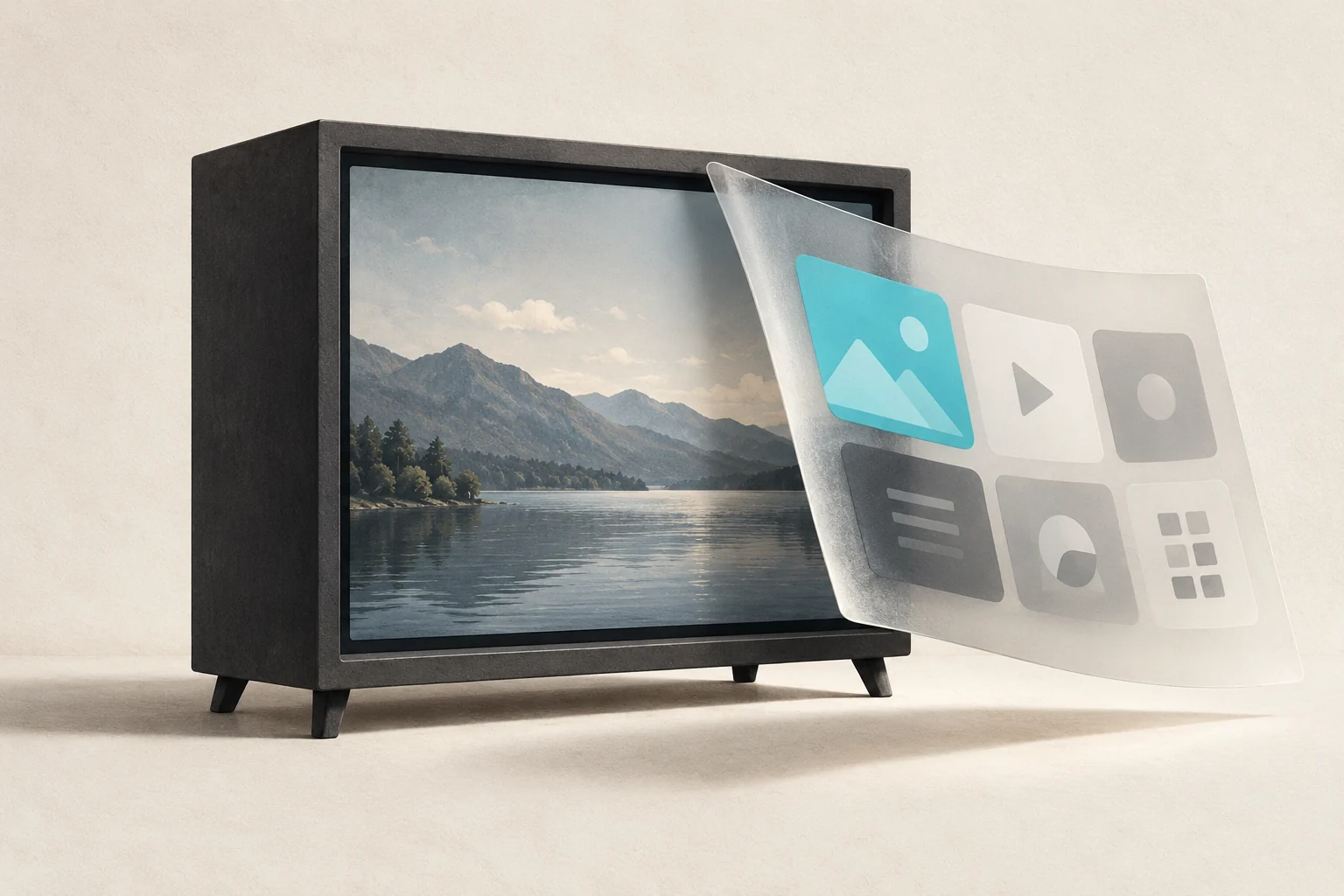
Yesterday I gave Codex a link to an X post about hacking a television and said, "Do this for me." Afterwards, I wrote that it had turned out to be a project taking no more than 20 minutes. I was already looking forward to trying other home devices.
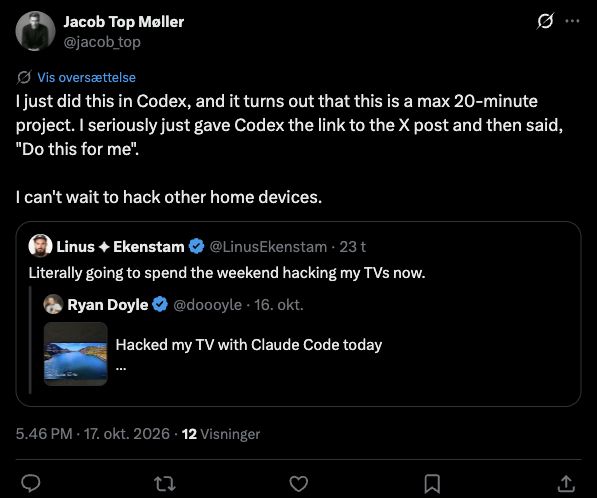
The discussion had reached me through Linus Ekenstam, who said he was going to spend the weekend hacking his TVs. What interests me about this is how little distance there can now be between seeing someone change a product and asking for help doing it yourself. I can describe the result I want and use Codex to help work through it.
A television is a useful example because selling the physical device can be the beginning of the commercial relationship. Roku describes the connection directly in its second-quarter 2026 filing. It manages device selling prices to grow the number of streaming households, expecting the trade-off in device gross profit or loss to support more platform revenue and gross profit over time. That platform revenue includes advertising and subscriptions.
Roku also identifies a limit to this model. Users may spend their time in apps where it has little or no ability to place ads or use viewer information. They may opt out of data collection used for more relevant advertising. The company says those behaviours can affect its expected growth. The relationship between having a device in someone's home and earning money from its use already depends on what happens through the software.
AI-assisted modification gives me another reason to examine that dependency. A device owner who changes the interface may keep the hardware while using less of the experience through which the supplier hoped to earn money. The screen can remain in the living room for years. Whether it continues to deliver the same commercial access is a separate question.
I am interested in the effort it takes to make that choice. A person might have accepted an awkward interface because investigating alternatives and making them work seemed too difficult. If they can ask an agent to help with the investigation and the implementation, that calculation can change. The parts they previously tolerated become things they can act on.
I do not know how many people will modify their televisions or how long the changes will keep working. Different devices will allow different things. My own experiment gives me a reason to pay attention to this; it gives me no basis for putting a number on the revenue at risk.
For the company, though, there is a concrete assumption to examine: which future revenue depends on the customer continuing to use the supplied software in the supplied way? Some of that revenue may come from services the customer actively wants. Some may depend on an interface they have accepted because changing it was inconvenient. An installed device does not tell the company which of those relationships it has.
For a company that accepts lower hardware margins in anticipation of future platform income, easier modification could change the return on that choice. It may need to earn more from the hardware, offer a service the owner wants to keep using, or accept less income after the sale. Those are different commercial decisions from selling another television.
I started with an X post and a television project. I now want to understand how this develops across products people already own. A manufacturer may still have made the hardware, sold it and supported it. The owner is gaining more ways to decide what runs on it afterwards, and that is a consequential change for a business planning to earn money from years of continued use.