10 cash flow resources for self-employed people
See when money arrives and what must be paid before then.
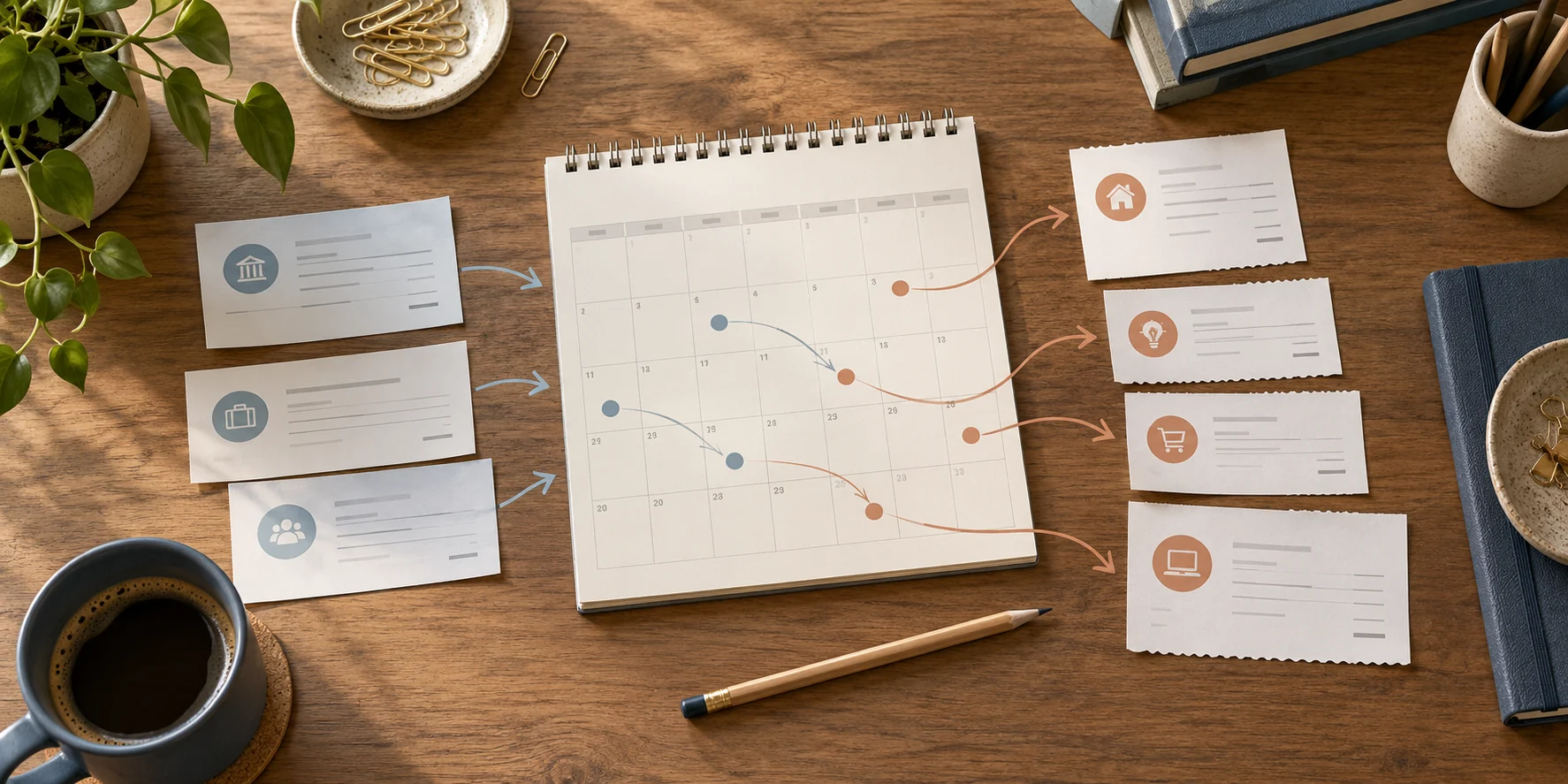
A profitable project can still leave you short of cash when the client's payment arrives after your bills. Suppose the client will pay on the 28th and your rent is due on the 15th. A monthly total may look healthy while the bank balance falls short in between. Put both dates in a forecast, then decide whether to move a payment, keep a reserve or agree different terms.
These ten resources help with separate parts of that work: understanding the numbers, making a forecast, checking payment terms and responding to an overdue invoice. For a first forecast, start with resources 2 and 3. Before agreeing a new project, use 6 and 7; if an invoice is overdue, begin with 8. The resources are selected for someone running a small business, not ranked. Several come from public agencies in Australia, New Zealand, the UK or the US; their legal and tax rules are local, so check the rules where your business operates.
1. Keeping track of key metrics
Keeping track of key metrics defines revenue and net profit alongside other measures for tracking a business. Use it to identify which figures your financial reports are describing before building a cash forecast.
The page introduces several measures. It will not tell you when a particular customer will pay; put that expected date in your forecast separately.
2. Cash flow forecasting
Cash flow forecasting shows the opening balance, expected receipts, outgoings and closing balance for a period. It also suggests preparing pessimistic, realistic and optimistic estimates.
Start with the dates on your bank balance, invoices and bills. An estimate is only as useful as its assumptions: a promised project and an invoice already due do not carry the same certainty.
3. Set up a cash flow statement
Set up a cash flow statement offers a downloadable spreadsheet and explains the lines to complete. It is a way to put actual or expected receipts and payments in one place rather than keeping them in separate notes.
The instructions use monthly balances and Australian GST terminology. Adapt it to your own reporting needs and ask a local accountant about tax treatment; a monthly total can hide a shortage between two dates.
4. Healthy business checklist
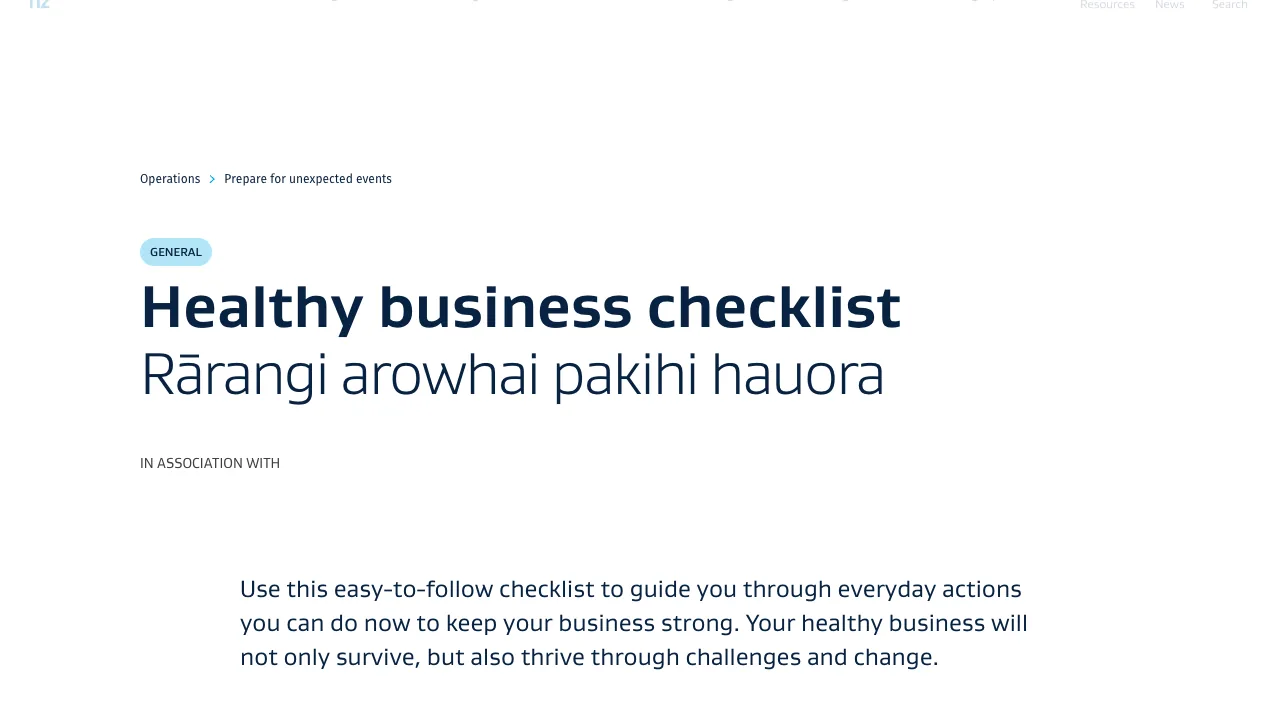
The healthy business checklist prompts you to compare different cash scenarios and look at the business as a whole. Use it after making a forecast to decide what reserve you need and which costs you would protect if income fell.
The site references a forecasting tool that is temporarily unavailable. The checklist itself remains useful, and you can use your own spreadsheet. The broader guidance includes staff and stock decisions that may not apply to a one-person business.
5. Break-even point calculator
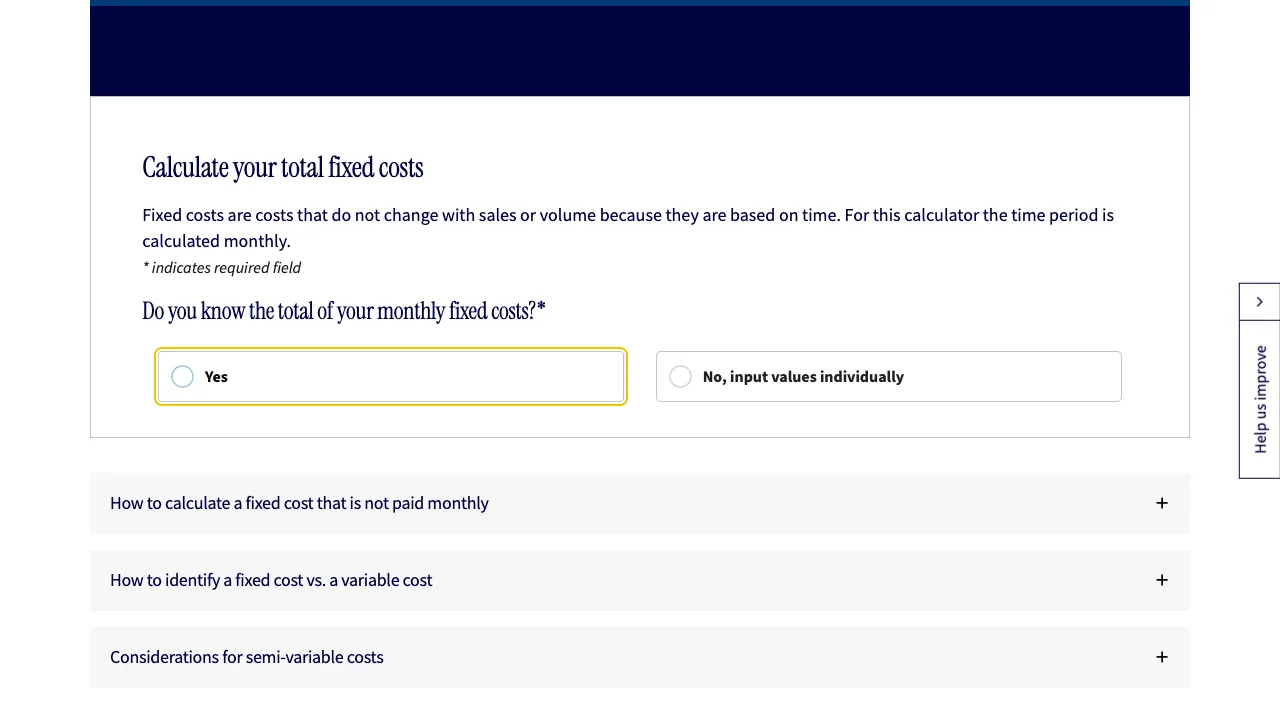
The break-even point calculator estimates the number of units or services needed to cover fixed costs at a given price and variable cost. It can make the workload implied by a revenue target visible.
Its model uses monthly inputs and a per-unit contribution. Define one consistent service unit and use one currency throughout. Projects with very different scopes may not fit the same per-unit model. Break-even volume does not establish payment timing.
6. Payment terms
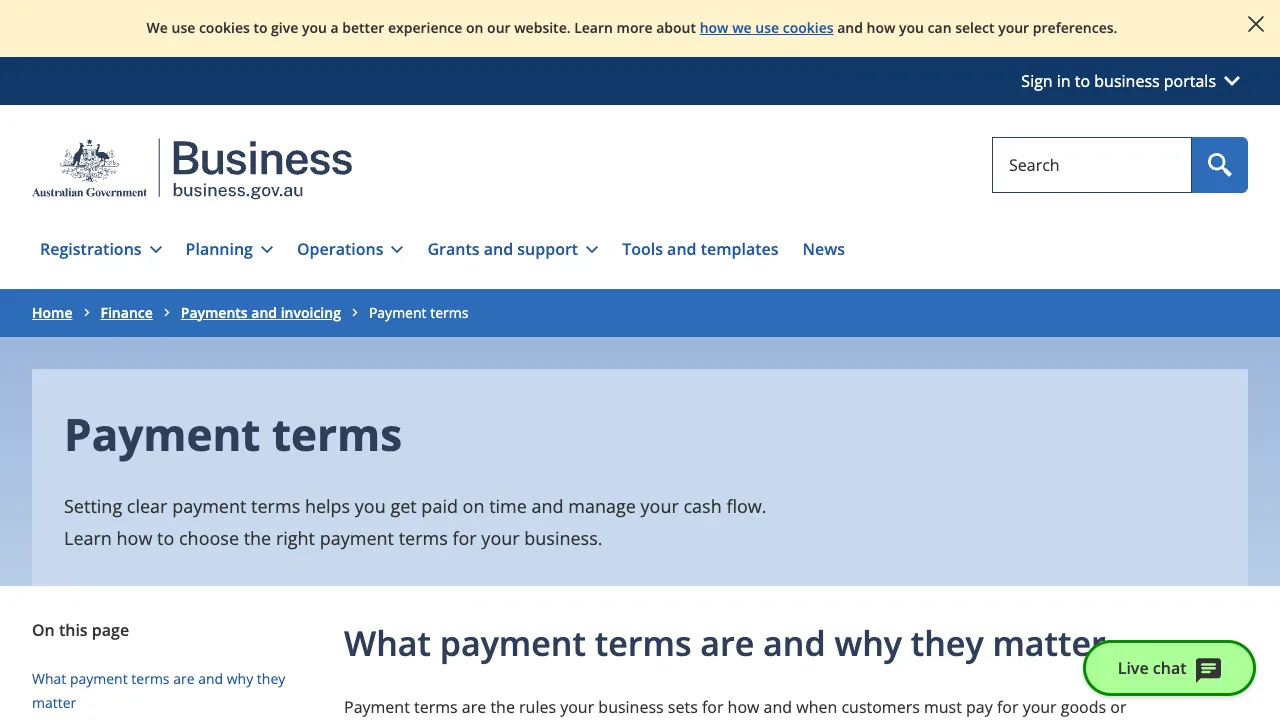
Payment terms helps you decide when and how a customer is expected to pay. Before accepting a long project, compare an upfront payment, instalments or payment on delivery with the costs you must carry along the way.
The guide is written for Australia and describes arrangements that depend on agreement and applicable law. It does not tell you what any particular client will accept. Put the agreed terms in writing and check local requirements.
7. How to invoice
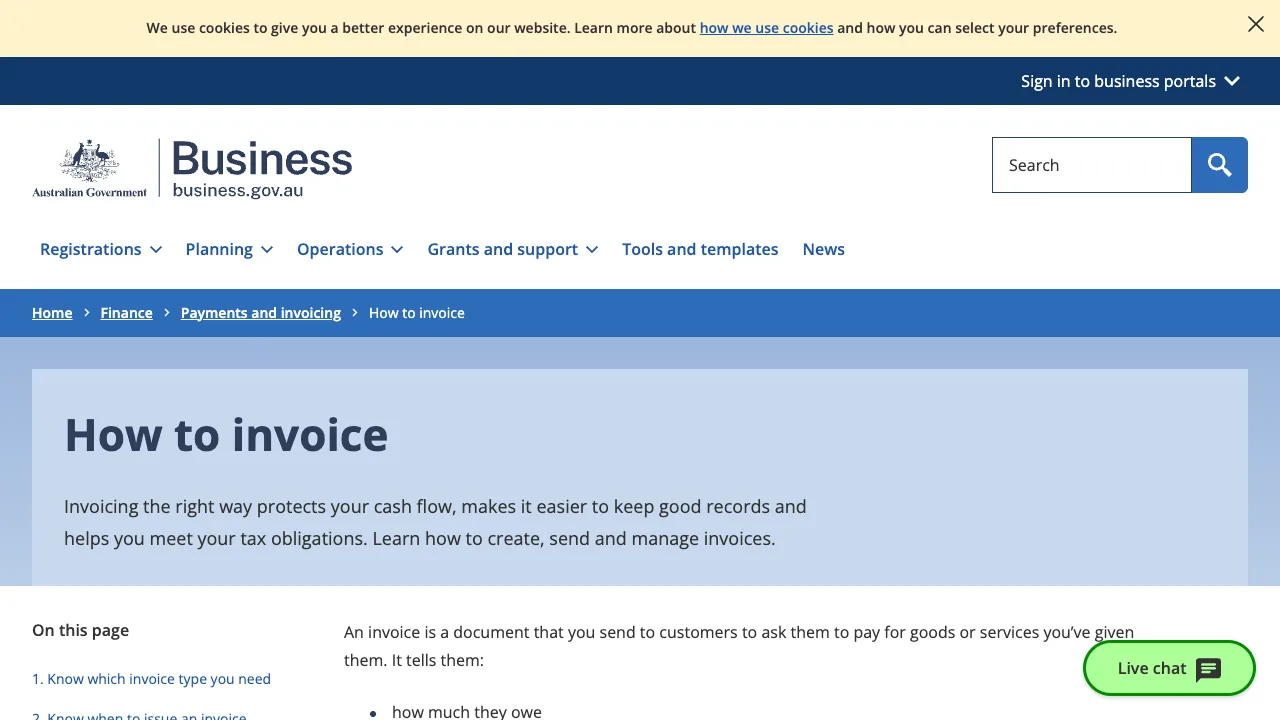
How to invoice covers information and processes for issuing invoices. It is useful when work is complete but payment is delayed because invoice or payment details are missing or incorrect.
The mandatory invoice and GST details on the page are Australian. Use them as a prompt to check your own country's requirements, not as a universal template. Agree the customer's billing process before the delivery date.
8. Help with unpaid invoices
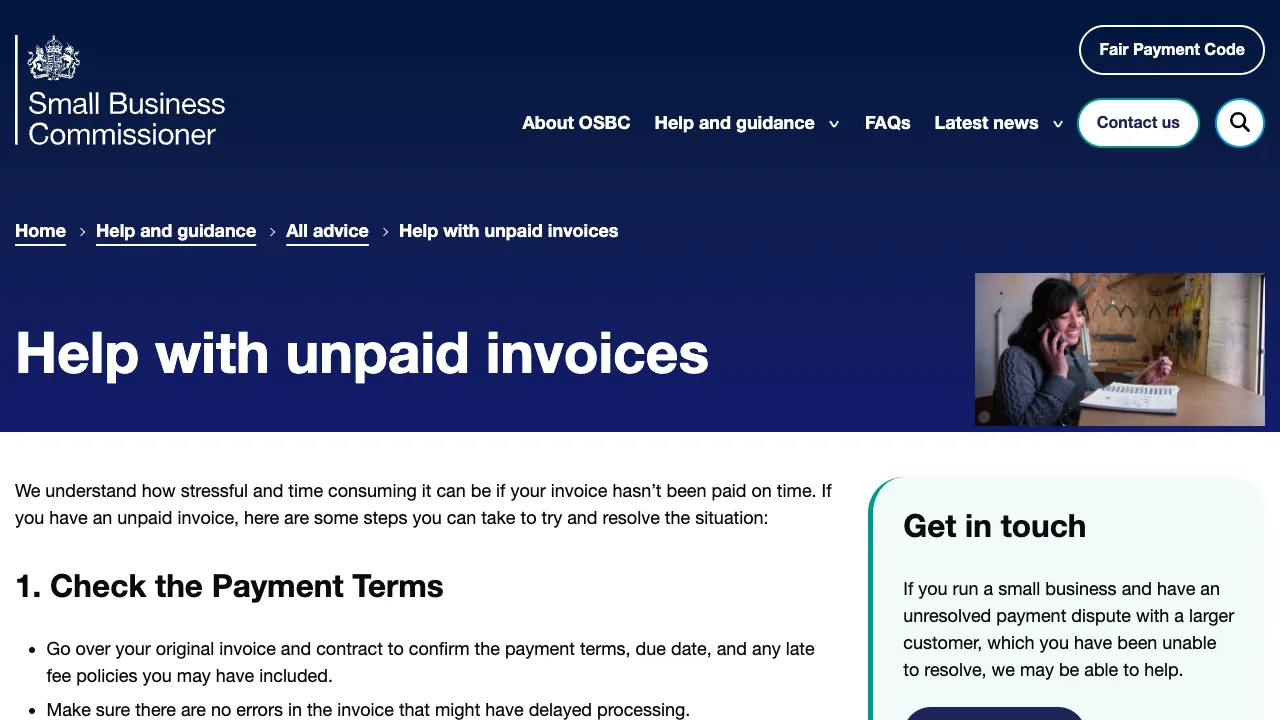
Help with unpaid invoices sets out a sequence from checking the invoice and terms to contacting the customer and considering further action. It gives you a place to start when an expected receipt does not arrive.
Its late-payment remedies are UK-specific; the Commissioner describes assistance for eligible unresolved disputes involving a small business and a larger customer. Do not assume the same rights or support apply elsewhere. Record the conversation and get appropriate local advice before escalating a dispute.
9. Check when large businesses pay their suppliers
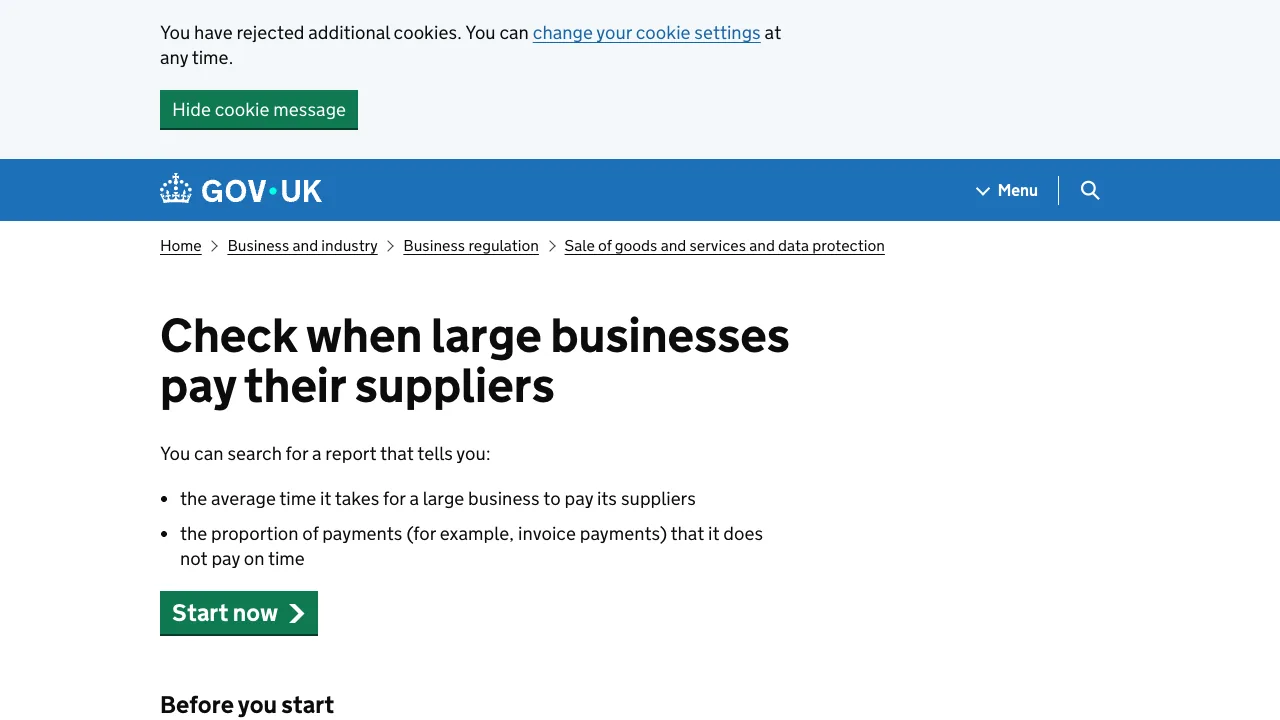
Check when large businesses pay their suppliers lets you look up payment-practice reports for businesses covered by the UK reporting scheme. If a prospective customer is included, the reported average and proportion paid late can inform questions about their purchasing process.
The data covers reporting businesses, not every customer or your future invoice. It is a historical aggregate, not a promise about a particular contract. Use it alongside the payment terms and your own cash forecast.
10. Improve your cash flow
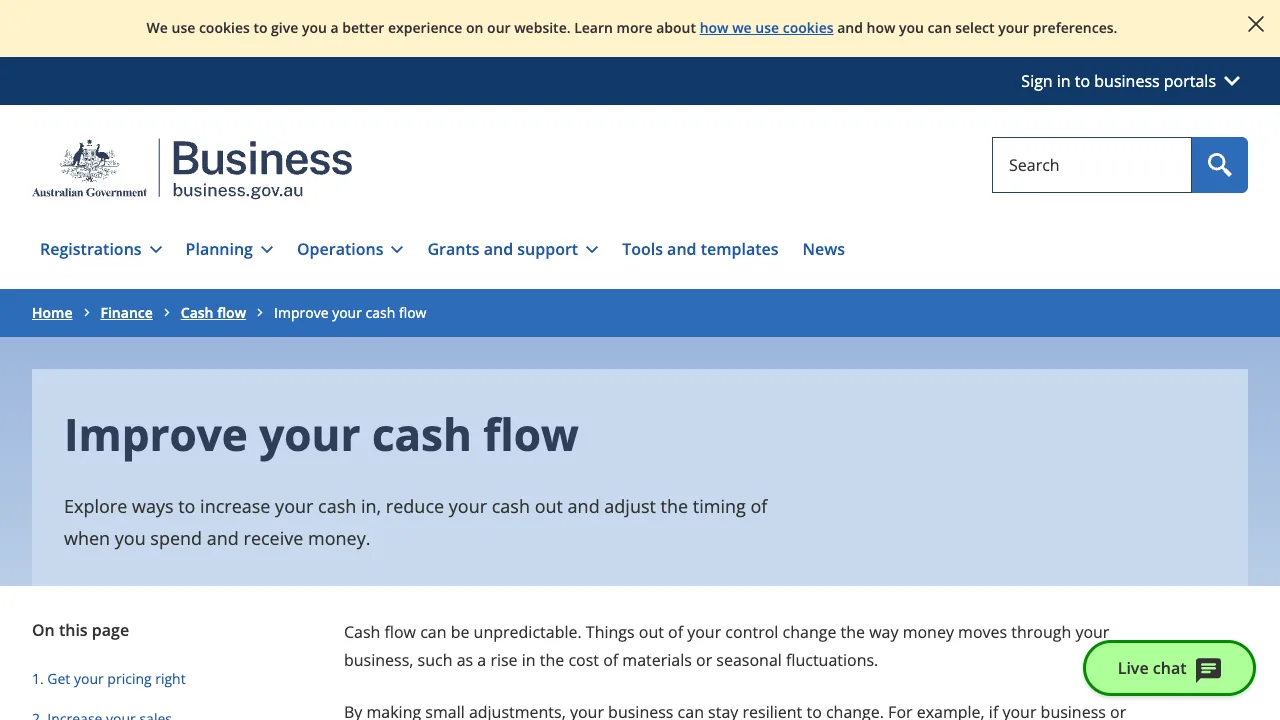
Improve your cash flow collects possible responses when cash is tight, including reviewing costs, collecting payments and discussing arrangements with suppliers. Use the list to identify which action addresses the timing problem you actually have.
Borrowing, agreeing a later payment date or selling an asset can introduce costs and obligations of its own. Compare the consequences and seek advice appropriate to your business before committing. A temporary cash shortage and an ongoing business loss may require different decisions.
Start with your actual bank balance and the next payment dates. If a forecast shows a gap, work backwards: which receipt or expense creates it, who can change the date, and what would that change cost? Then revisit the forecast when the answer changes. A coaching conversation for self-employed people can help you consider how those decisions fit the work and income you want to build.
Sources
- Keeping track of key metrics
- Cash flow forecasting
- Set up a cash flow statement
- Healthy business checklist
- Break-even point calculator
- Payment terms
- How to invoice
- Help with unpaid invoices
- Check when large businesses pay their suppliers
- Improve your cash flow
Sources checked on 31 October 2026.