10 pricing strategy books for consultants
Ten books for setting fees, offering options and changing how you charge for consulting work.

Alan Weiss's Value-Based Fees is a starting point for discussing an engagement fee with a client. For estimating what a change is worth to the buyer, start with Value First, Then Price. For a service clients need month after month, Time's Up! looks at the subscription model.
The price of a project, the way you bill for it and the work you agree to take on are separate decisions. A fixed fee can give a client cost certainty while leaving you exposed to a vague scope. A subscription can make sense when the client has an ongoing need and you can keep the commitment. Pick a book according to the decision you need to make.
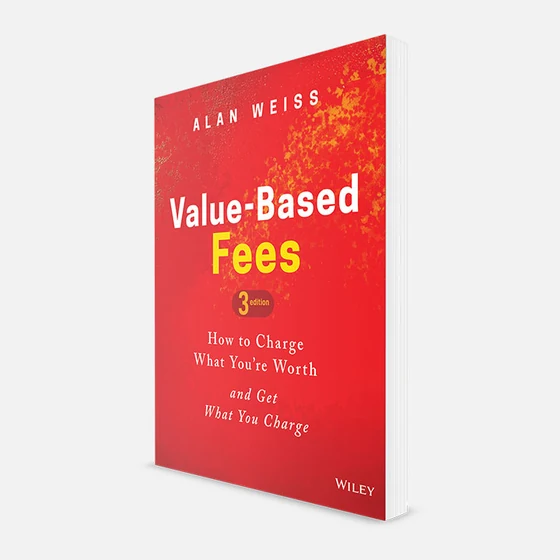
1. Value-Based Fees
Alan Weiss writes for independent consultants and boutique firms that want to set fees around the value of an engagement. The third edition covers fee objections and how to introduce the model to existing clients. Use it to prepare for a conversation where a buyer asks what the work will achieve and why that warrants the fee. Before that meeting, put the result the buyer cares about and the proposed work on the same page. Author's book page

2. Value First, Then Price
This collection, edited by Andreas Hinterhuber and Todd C. Snelgrove, covers how businesses quantify and document value for buyers, drawing on industrial and B2B cases. It fits an engagement where the outcome sounds useful but the buyer needs a number they can defend. In an example about shortening an internal process, start with the volume of work and time currently spent. Ask who can verify both before putting a monetary figure in the proposal. Routledge book page
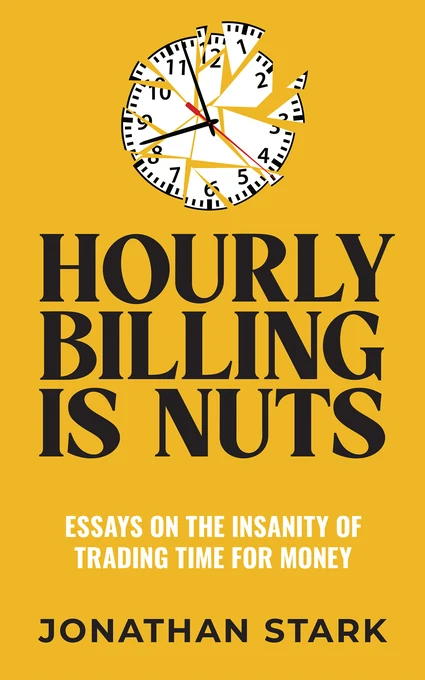
3. Hourly Billing Is Nuts
Jonathan Stark's essays make the case against selling professional work by the hour. The book is useful if your next decision is whether to try a different billing model on a well-defined job. Put the same engagement on paper twice, once with hourly billing and once with a fixed fee. Compare who bears the cost if the work takes longer. Define what the fixed fee covers and who can approve a change. Author's book page
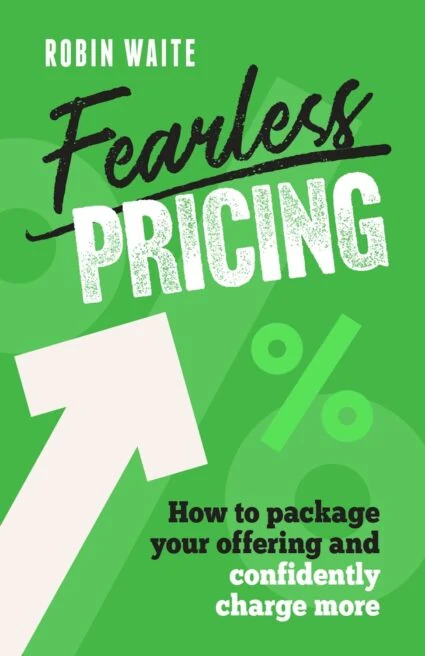
4. Fearless Pricing
Robin Waite covers how coaches, consultants and freelancers package an offer and talk about its price. This fits when you keep writing the same scope from scratch. Take an engagement you have already delivered and write down which steps could be repeated for another client. Name the work that varies too much to include in a standard package. Practical Inspiration Publishing book page
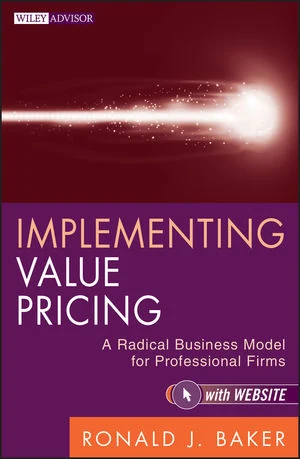
5. Implementing Value Pricing
Ronald J. Baker looks at what it takes to adopt value pricing across a professional firm. This suits a firm with several people setting fees, where a change involves how they make and review those decisions. Pick one kind of engagement and decide who can approve the fee. After delivery, review what the client valued and where the work overran before changing policy for the whole firm. Wiley book page
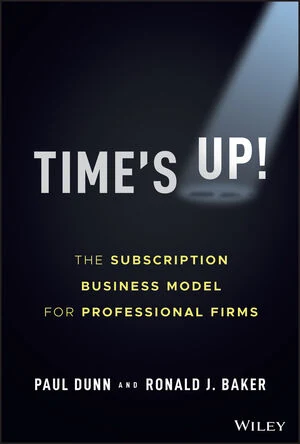
6. Time's Up!
Paul Dunn and Ronald J. Baker write about subscriptions for professional firms. It fits an owner who needs to decide what a client could reliably get from an ongoing relationship. Start by naming the work that comes back each month and the access the client needs between scheduled sessions. Check what would happen if several clients asked for that access in the same week. Wiley book page
7. The Strategy and Tactics of Pricing
Thomas T. Nagle, Georg Müller and Evert Gruyaert cover choices that go beyond the amount on a quote, including price structure, competition and price sensitivity. Use the chapter on price structure when engagements of different sizes all have the same rate or fee. Compare what clients are buying at each level and what it costs to serve them. Routledge book page
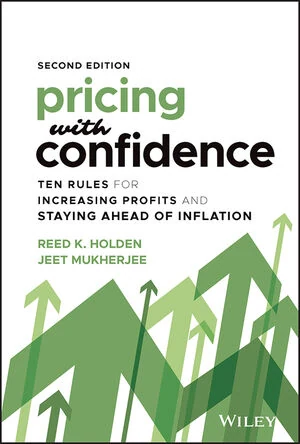
8. Pricing with Confidence
Reed K. Holden and Jeet Mukherjee address discounting and how firms prepare for tough price negotiations. Read it when fee reductions have become the quickest way to get a proposal signed. Look at recent discounts and ask what each changed in the agreement. A buyer with a smaller budget may still be able to buy a smaller engagement with a result worth pursuing. Wiley book page
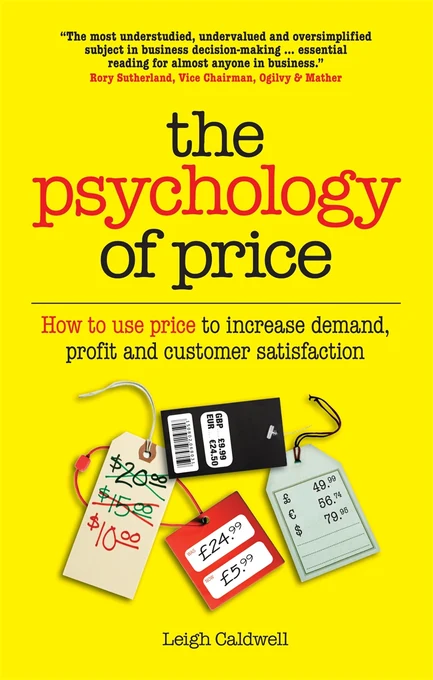
9. The Psychology of Price
Leigh Caldwell writes about the effect of payment timing and presentation on how people judge a price. The publisher describes consumer examples, so use the ideas as questions when adapting them to consulting. Ask a reader to compare two proposals and say what each costs in total, when payments are due and what is included. The answers can show where the presentation is making the fee harder to understand. Hachette book page
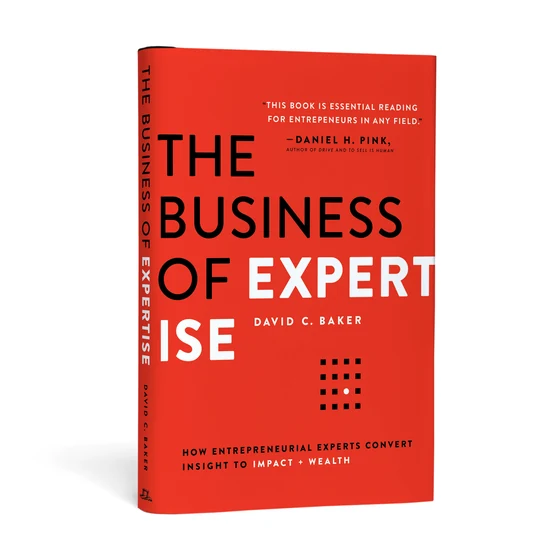
10. The Business of Expertise
David C. Baker looks at how independent experts develop insight and choose and test a market position. It fits when prospective clients have trouble seeing why they should hire you for a particular kind of work. List the alternatives a prospective buyer brings up in conversation. If your offer sounds interchangeable with theirs, narrow the client problem you promise to solve before rewriting your fee sheet. Author's book page
Where to start
Take a recent proposal and mark where the conversation got stuck. If the buyer could see the outcome but could not justify its value internally, start with the book on quantifying value. If the number was clear but nobody had agreed what counted as extra work, revisit how you price a freelance project before sending a quote. If a pricing change would affect which clients or work you can take on, business coaching can help you work through that decision.
Sources
- Value-Based Fees
- Value First, Then Price
- Hourly Billing Is Nuts
- Fearless Pricing
- Implementing Value Pricing
- Time's Up!
- The Strategy and Tactics of Pricing
- Pricing with Confidence
- The Psychology of Price
- The Business of Expertise
Sources checked on 20 November 2026.