10 resources for testing a business idea
Choose a resource for the assumption you need to test.

The Mom Test and Talking to Humans help prepare customer conversations; the canvases help describe what the proposed business depends on. The Test Card and Learning Card connect a planned experiment with what happened, while Design Kit and the pretotyping reference offer ways to make an idea testable. Choose the resource for the uncertainty that would change your next decision.
These ten books and practical resources were selected for their original authors' or providers' descriptions, relevance to an owner developing an offer, and different jobs within that work. Several belong to Strategyzer's connected toolkit. You do not need to adopt the whole set, and a completed worksheet does not demonstrate demand. Book descriptions below are not claims of personal reading; check current access and purchase conditions at the source.
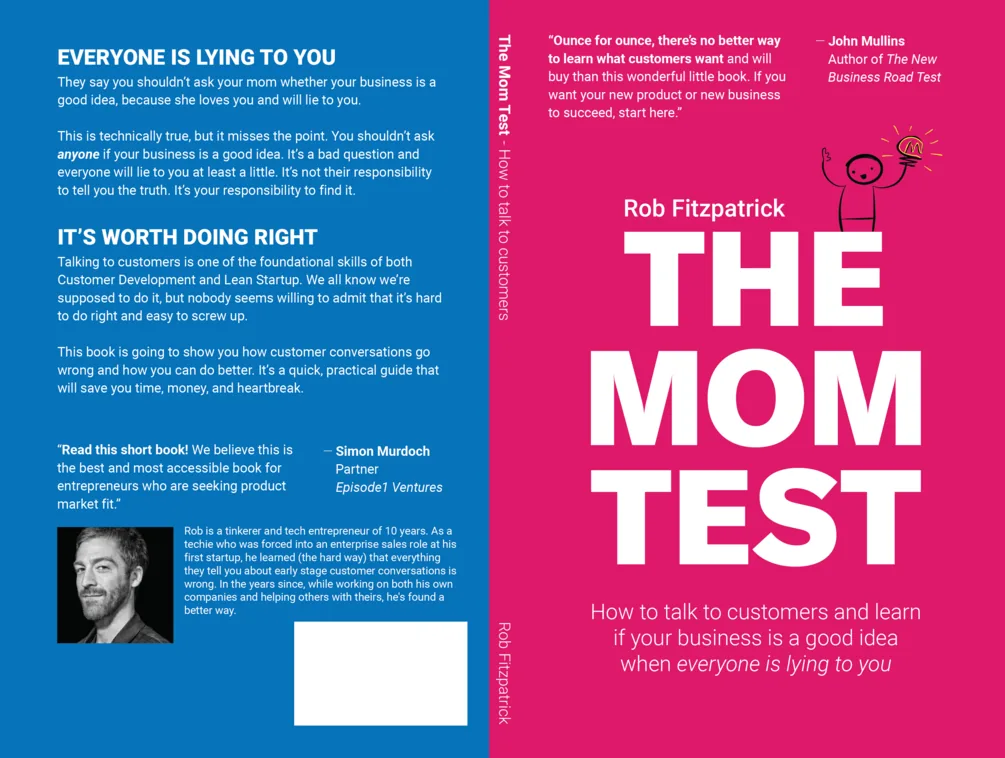
1. The Mom Test
The Mom Test is for getting more useful learning from customer conversations. Rob Fitzpatrick's book addresses biased feedback and the difficulty of working out whether someone is genuinely going to buy.
It fits the owner whose idea keeps receiving encouraging reactions. Use it to prepare a conversation that can reveal what remains unknown about the proposed offer. A positive discussion still leaves a separate commercial question: what, if anything, has the other person agreed to do? The author's promised benefits are not evidence that a particular interview will produce a customer.
2. Talking to Humans
Talking to Humans is for organising customer discovery before building a business. Giff Constable's book is presented as a guide to the qualitative work of learning from people, with Frank Rimalovski as editor and Tom Fishburne as illustrator.
Choose it when the missing step is a workable discovery process, rather than an individual question. For a proposed service, identify the people whose work you need to understand and what you hope to learn from them. The book's startup setting needs translating into your situation; interviewing potential customers does not establish the price they will pay.
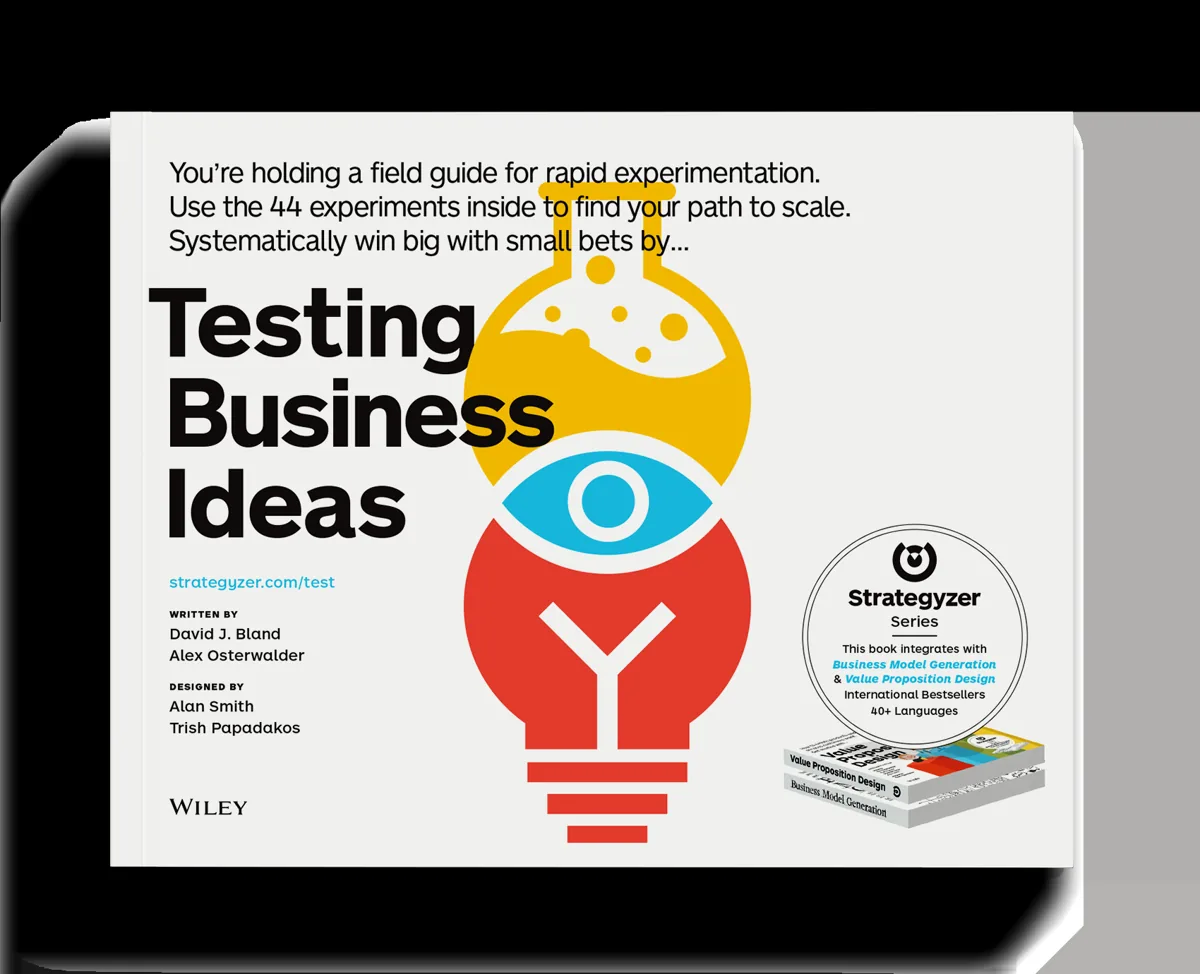
3. Testing Business Ideas
Testing Business Ideas is for choosing an experiment to investigate a business assumption. Strategyzer describes a library of experiment types organised by cost, time and strength of evidence, alongside a method for prioritising testable assumptions.
It offers a broader menu than either of the individual cards below. An owner considering a new service can first ask which uncertain assumption would make the offer unworkable, then choose a test that could change the decision. A catalogue supplies options; the owner still has to decide what would count as a useful result in this business.

4. Value Proposition Canvas
The Value Proposition Canvas is for describing the customer need an offer is meant to address. Strategyzer separates the customer's jobs, pains and gains from the products or services and the value they are intended to provide.
Use it when the proposed service is easy to describe but the customer's reason to choose it is vague. Put the assumed customer need beside the part of the offer meant to address it, then investigate the connection. A match drawn on the canvas remains a claim until customer evidence supports it. The linked page also promotes paid playbooks; the tool and the subscription are different commitments.
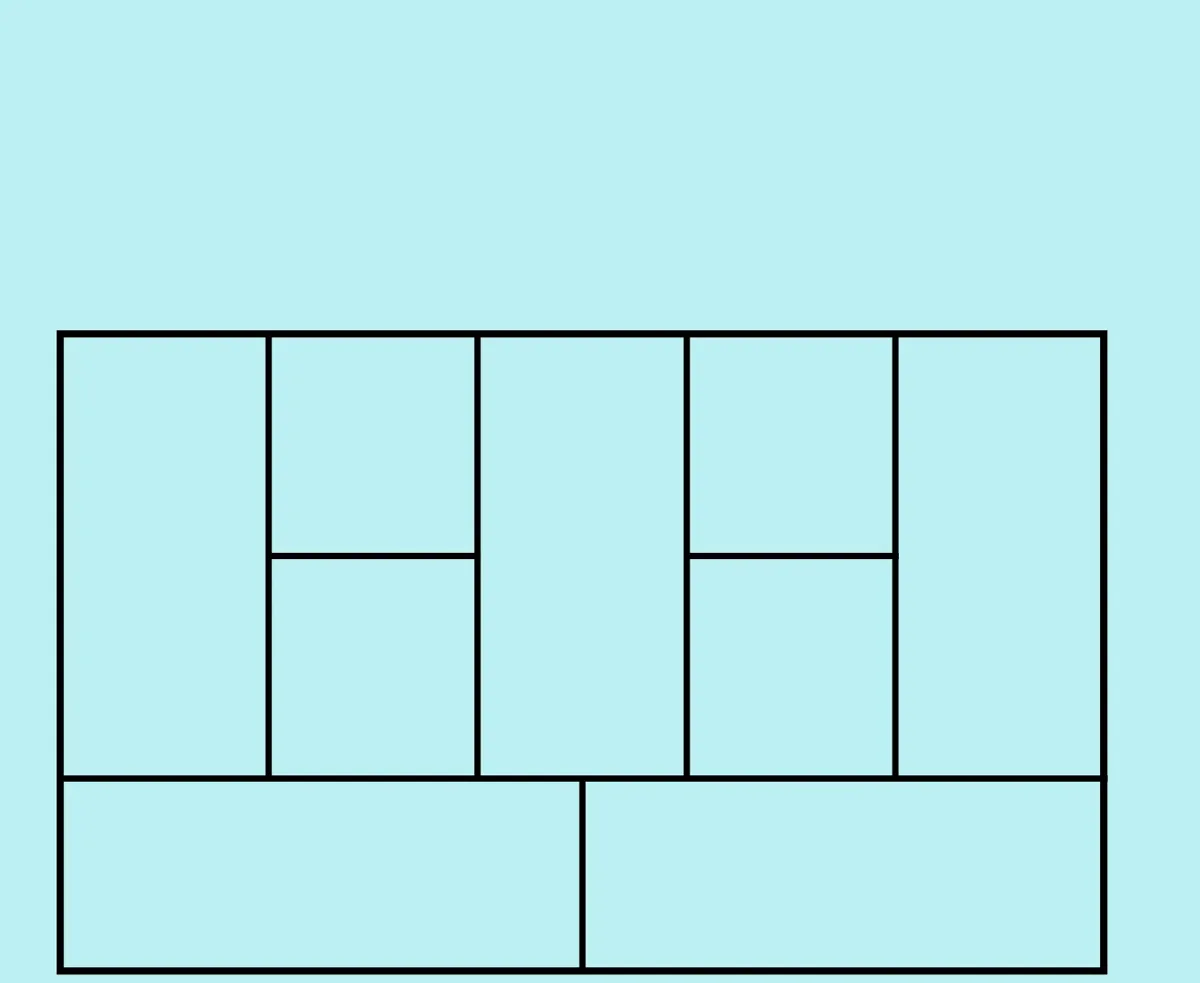
5. Business Model Canvas
The Business Model Canvas is for seeing how the proposed business would operate and earn. Strategyzer's nine-block tool brings customers, the offer, delivery, costs and revenue into one view.
Choose it when an attractive service idea still depends on an unclear delivery arrangement. An offer that requires a partner's time or a costly route to customers needs those dependencies in the same discussion as its income. Unlike the Value Proposition Canvas, this view concerns the whole model. Writing a revenue stream into a box does not establish that it will occur.
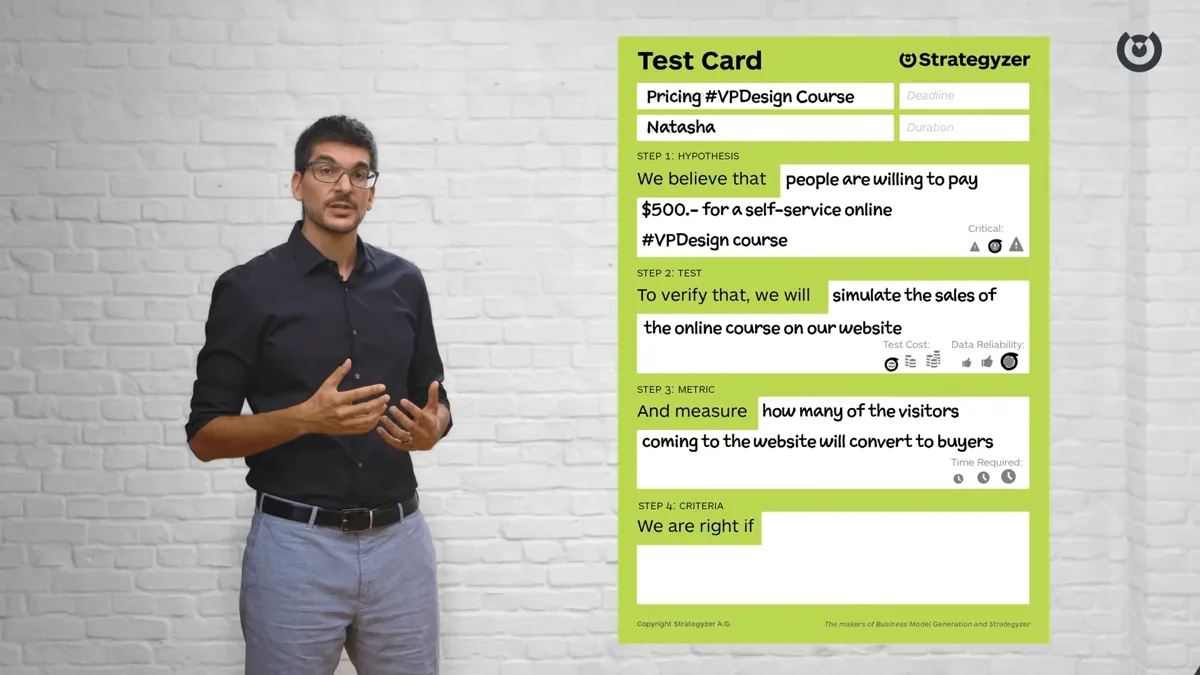
6. Test Card
The Test Card is for agreeing what an experiment is meant to establish before running it. Strategyzer asks for the hypothesis, the test, the measurement and the threshold for success.
For a proposed service, an owner could state which customer action would justify preparing a small paid pilot, then decide how to observe that action. Keep the proposed threshold and its reason visible before the result arrives. This is a planning aid; it cannot make a weak measurement meaningful or turn a small sample into proof of a whole market.
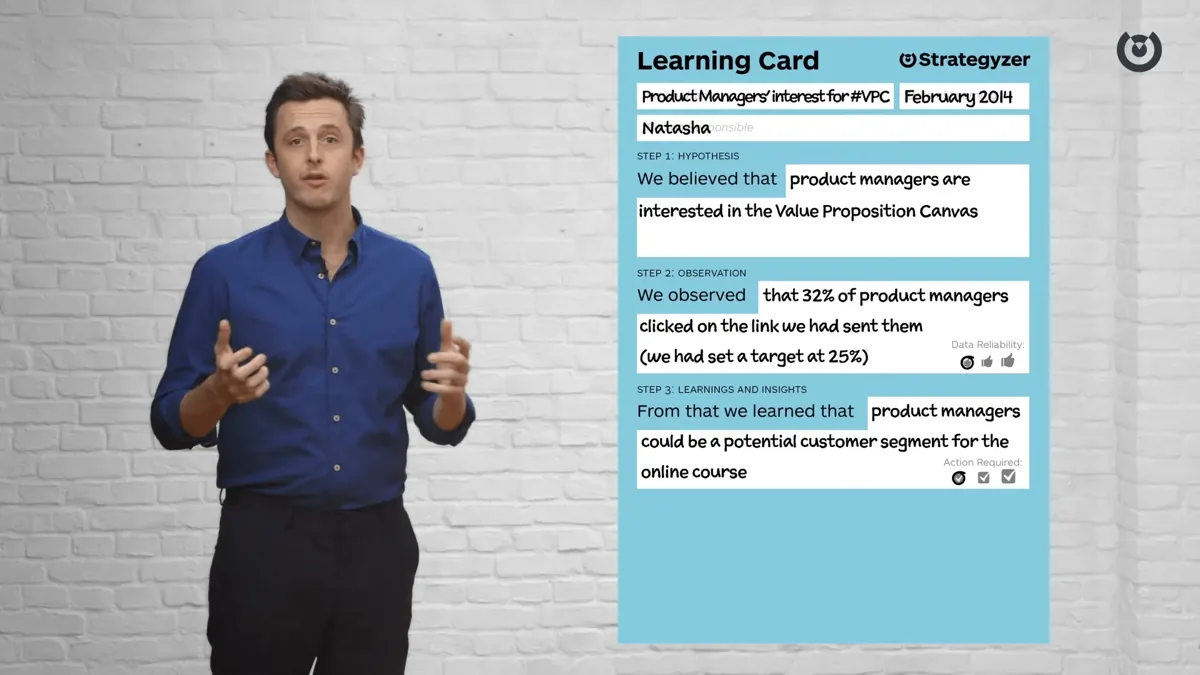
7. Learning Card
The Learning Card is for deciding what follows from a completed experiment. Strategyzer separates the hypothesis tested, the observations, the insights drawn from them and the action to take next.
This serves a different moment from the Test Card. After a conversation or pilot, record what the person actually did separately from your interpretation of it. If they requested a proposal, keep that as the observed step, with acceptance and payment still unresolved. The card is useful only if its next action reflects what happened, including a result that gives you a reason to change or stop the idea.

8. Design Kit Interview
Design Kit's Interview method is for preparing and conducting a conversation with the people you are designing for. IDEO.org recommends prepared questions, clear research roles and recording what the person says rather than substituting an interpretation.
Choose it when you need a short practical guide rather than another book. An owner could use it to prepare a conversation about how someone currently handles the work a new service would support. Recording their words helps preserve the account; it does not settle how representative it is. Agree any recording or photography with the participant and protect information they share.

9. Design Kit Rapid Prototyping
Design Kit's Rapid Prototyping method is for making an idea tangible enough to test and improve. IDEO.org connects choosing what to prototype with running tests, capturing findings and iterating.
For a service idea, a small example of the proposed output could give a potential customer something to react to. Decide what you need to learn from that example before making a polished version. Feedback on its usefulness leaves demand and delivery cost to investigate separately. The guide describes a design process whose time and difficulty depend on the concept, not a guaranteed quick route to a viable business.
10. Pretotyping quick reference
Alberto Savoia's pretotyping quick reference is for comparing ways to test interest before a full launch. The one-page resource includes trying a service in a smaller setting or offering it for a limited period.
It can prompt a bounded trial of work you can actually deliver. Some techniques and historical examples in the sheet imply that an offer is already available or disguise how it operates. For a service trial, be explicit about what exists, what the participant will receive and any payment; get the permissions the test needs. The reference gives experiment ideas, not permission to mislead people or a current valuation of the companies in its examples.
Author's resource page and PDF
A proposed offer and the uncertainty behind it give a business coaching conversation something practical to work with. Put the preparation and test beside the other work your business needs before deciding how much time to commit.
Sources
- The Mom Test
- Talking to Humans
- Testing Business Ideas
- Value Proposition Canvas
- Business Model Canvas
- Test Card
- Learning Card
- Interview
- Rapid Prototyping
- Pretotyping quick reference
Sources checked on 14 November 2026.