AI training for presales: what Sales Engineers should check
AI training for a presales or Sales Engineering team should follow its own tasks and teach what a person checks before the work reaches a customer.
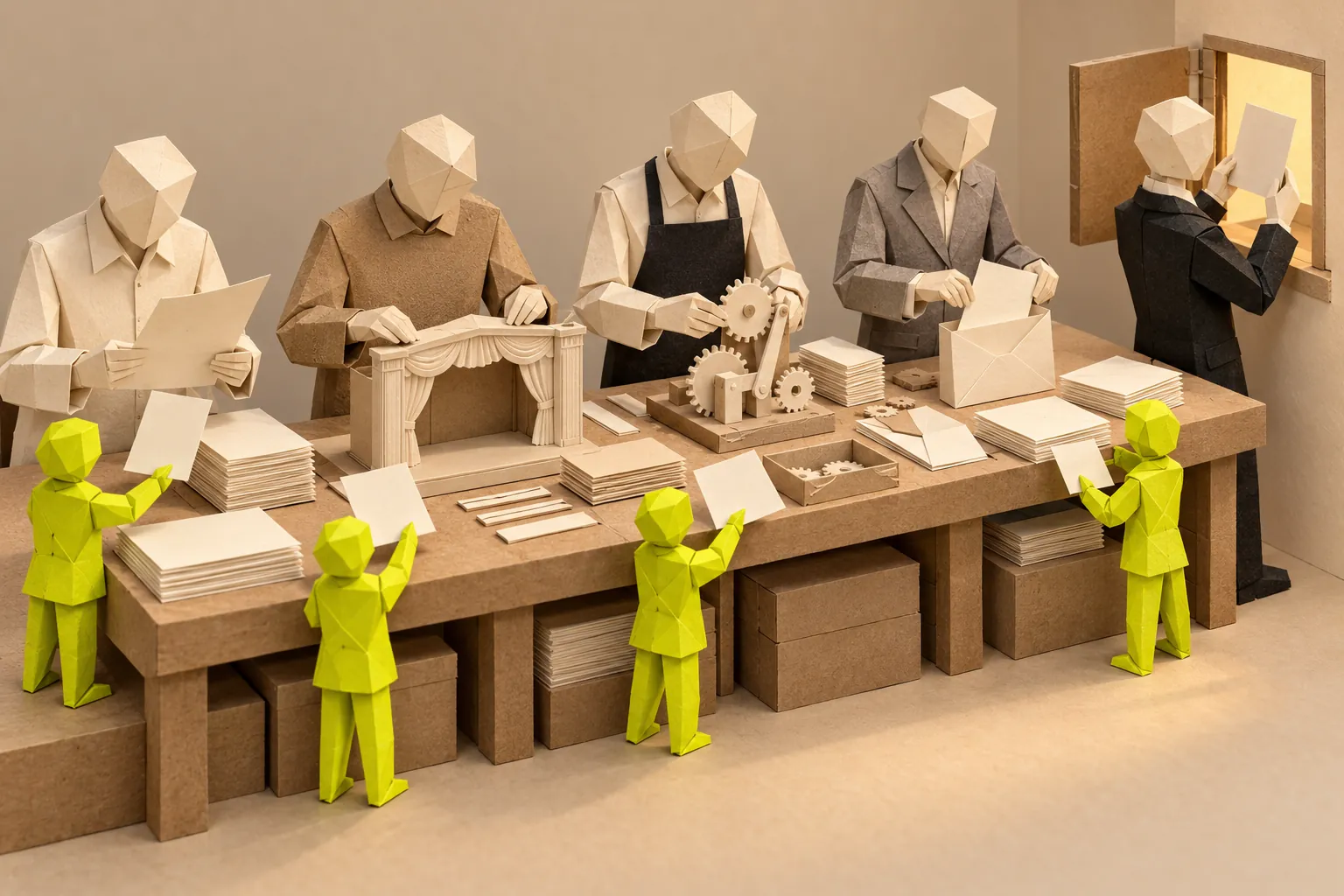
Build AI training for presales as one module per task your Sales Engineers already do: meeting preparation, discovery summaries, the demo, the proof, and follow-up emails and RFP answers. In each module they practise three decisions: what may go into which tool, what the AI may draft, and what a person checks before the draft reaches the customer.
Start by asking your team which of these tasks they already use AI for. In NAASE's Sales Engineering Signals 2025, a voluntary, self-selected survey with 42 respondents, 59% said they use AI tools regularly and 22% described their company's AI guidance as clear and consistent. The report names the work it is used for: technical emails, discovery notes, RFP and security questionnaire answers, first-draft demo scripts and checklists for technical validation.
Five questions for every task
Put five questions to each task. Which data can it use? Which systems can it access? What is it allowed to change? Who owns the output? What happens when it fails? They are the questions I ask about any AI change.
Which AI tools Sales Engineers may use for which data
Sort customer data into classes, and name the approved tools each class may go into. GitLab publishes the rules its Support Engineers follow when they use AI. Its quick rules classify "Customer PII, credentials, logs with sensitive data, ticket attachments" as Red, to be used with its own GitLab Duo tools only. Internal documentation and anonymised examples are Orange and may go into any approved tool. "When in doubt, treat data as Red." Before using a tool not approved for Red data, GitLab's engineers must remove customer names, account identifiers and credentials.

GitLab wrote these rules for support and for its own tools, so build yours from your company's own data classification. Without such rules, people improvise: NAASE describes Sales Engineers using consumer accounts for drafting, research and RFP support when approved tools or clear rules are missing.
Meeting preparation
What goes in is mostly public: the customer's website, annual report, press releases and the profiles of the people you will meet. The AI drafts a briefing, the customer's likely priorities and questions to ask. The check: open the source behind every statement about the customer or a named person and confirm that it supports the claim. Mark a priority the AI inferred as a guess, and turn it into a question for the meeting.
Discovery summaries
The AI can draft a summary and a list of requirements from a transcript or notes. Put those only into a tool approved for them, and record a call only when everyone on it knows.
A suit filed in a US federal court in August 2025 alleges that the note-taker of the transcription service Otter recorded meetings without the consent of the people in them. According to NPR's report on the suit, the software typically asked the meeting's host for permission to record but by default did not ask the other participants. In a sales call, the other participants are your customer.
The check: compare the summary with the recording or notes, including numbers, names and who said what. Keep "we might need single sign-on next year" as a possible future need, not an agreed requirement for the current evaluation.
Demo scripts and demo data
AI can draft the demo script, talk tracks for each persona in the room and demo data that looks like the customer's world.
The check: every feature the script shows exists in the version the customer will get. GitLab's support guidance warns that language models "frequently suggest outdated versions, incorrect release dates or features that do not exist in the customer’s version." Demo data holds no real customer identifiers.
Proof of Value test plans
For a Proof of Value, AI can draft the validation checklist and the test plan. What goes in may include the customer's architecture diagrams and log files, which fall under the same data rules.
The check: compare the plan's success criteria with those agreed with the customer. In a Proof of Value, success criteria are written down and agreed with the people who will judge the result. Any additional criterion needs their agreement before it becomes part of the plan.
Follow-up emails and RFP answers
AI can help draft technical emails, RFP answers and security questionnaires from current product documentation and approved security and compliance material, in a tool cleared for those inputs. For customer replies, GitLab tells its engineers to write their own response from their investigation and understanding before using AI to improve its formatting or wording. "Never send a response generated entirely by an LLM."
In the small-claims case Moffatt v. Air Canada, the airline's website chatbot suggested that a customer could apply for a bereavement fare retroactively, which Air Canada did not permit. The Civil Resolution Tribunal of British Columbia wrote: "It should be obvious to Air Canada that it is responsible for all the information on its website." Treat an answer a Sales Engineer sends as the company's answer, whoever drafted it.
The check: verify every claim about capability, security and compliance against a current approved source. Confirm dates and other commitments with the person authorised to make them, and test commands and code before sharing them. Name who signs off security and compliance answers before the module starts, so the Sales Engineer knows where to take an unresolved claim. NAASE's advice to leaders is to "require human review and source checking before AI-generated content is shared externally."
Test the training with a planted error
Test each module with a piece of the team's own work for that task, with customer details removed. Have the AI draft it, then plant a few errors of the kinds above: a feature the current version lacks, a "maybe" written as a requirement, a customer name in the demo data, a certification the company does not hold, a command that was never run. Ask each Sales Engineer to check the draft as if it were about to go to the customer, showing the source or test behind the claims they would approve. Use the errors they miss to decide what to practise again.

What to settle before the training
Before practising with customer material, agree which data may go into which tools and who approves customer answers. In NAASE's voluntary, self-selected survey of 42 respondents, 45% said their company's AI guidelines exist but are still evolving and 26% described them as unclear or inconsistent. If those decisions are still open, build the exercises with material already cleared for that use. The company-level decisions are set out in AI acceptable use policy: five decisions, with real examples. For staff in other roles, AI training for employees covers their own tasks, checking what AI produces and the company's rules.
In the EU, Article 4 of the AI Act has required companies that use AI systems to take measures to support the AI literacy of their staff since 2 February 2025. The European Commission's answers say this covers employees who use ChatGPT to write text.
I tailor AI training to the department taking part. For Sales Engineering teams it is tailored to the team’s own preparation and follow-up work. What AI changes in a team's preparation, demos and Proofs of Value is also one of the subjects I often work on with Heads of Sales Engineering in advisory.
Sources
- Sales Engineering Signals 2025. North American Association of Sales Engineers (NAASE), 2026.
- Using AI in Support. GitLab, 17 July 2026.
- Moffatt v. Air Canada, 2024 BCCRT 149. Civil Resolution Tribunal of British Columbia, 14 February 2024.
- Class-action suit claims Otter AI secretly records private work conversations. NPR, 15 August 2025.
- AI Literacy - Questions & Answers. European Commission, 20 October 2026.
Facts last checked on 27 October 2026.
Updated 26 October 2026.
Updated 27 October 2026.