Blackstone’s AI CIO: what I would want from the second memo
A second prepared view can give a decision meeting something useful to investigate. How that view is formed matters.

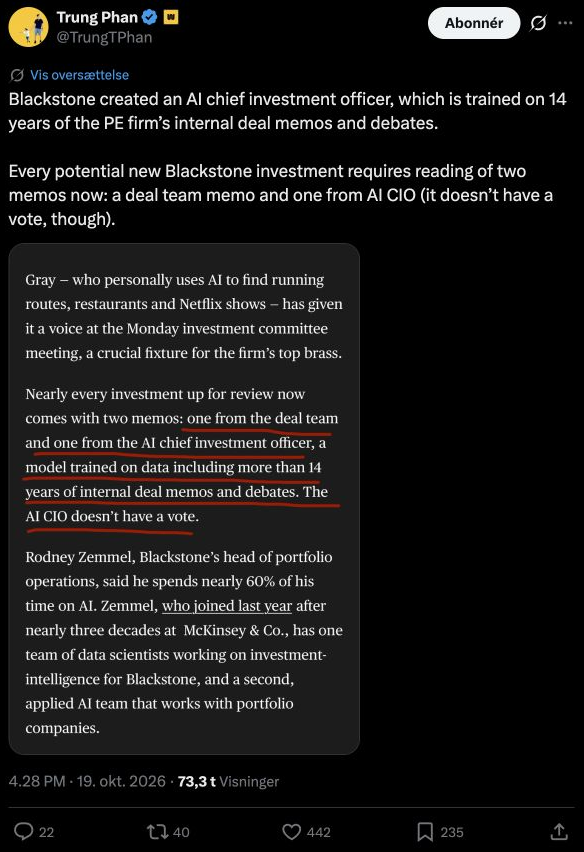
Trung Phan shared an X post about Blackstone’s AI chief investment officer yesterday. Bloomberg’s report describes a change to the firm’s investment reviews: nearly every investment under consideration now comes with a memo from the deal team and another from an AI CIO. The model was trained on data including more than 14 years of internal deal memos and debates. It has no vote.
I find the second memo interesting because of where it enters the work. A team has investigated an opportunity and made a case for committing money. The committee now has another prepared contribution to consider before deciding. That gives AI a specific responsibility in a consequential business process, with people still making the decision.
For that contribution to help, I would want it to examine the case from a position the team has not already supplied. The people recommending an investment have reasons for their recommendation. Giving the committee a useful challenge means finding the assumptions on which those reasons depend and examining what would happen if they were wrong.
That raises a design question. If the AI begins with the team’s finished recommendation and writes a response around it, how much of the team’s framing will it inherit? I would want to see what it concludes from the underlying evidence before showing it the recommendation. We could then compare the two accounts and examine the disagreements. I do not know how Blackstone prepares its AI memo; this is how I would want to test the idea.
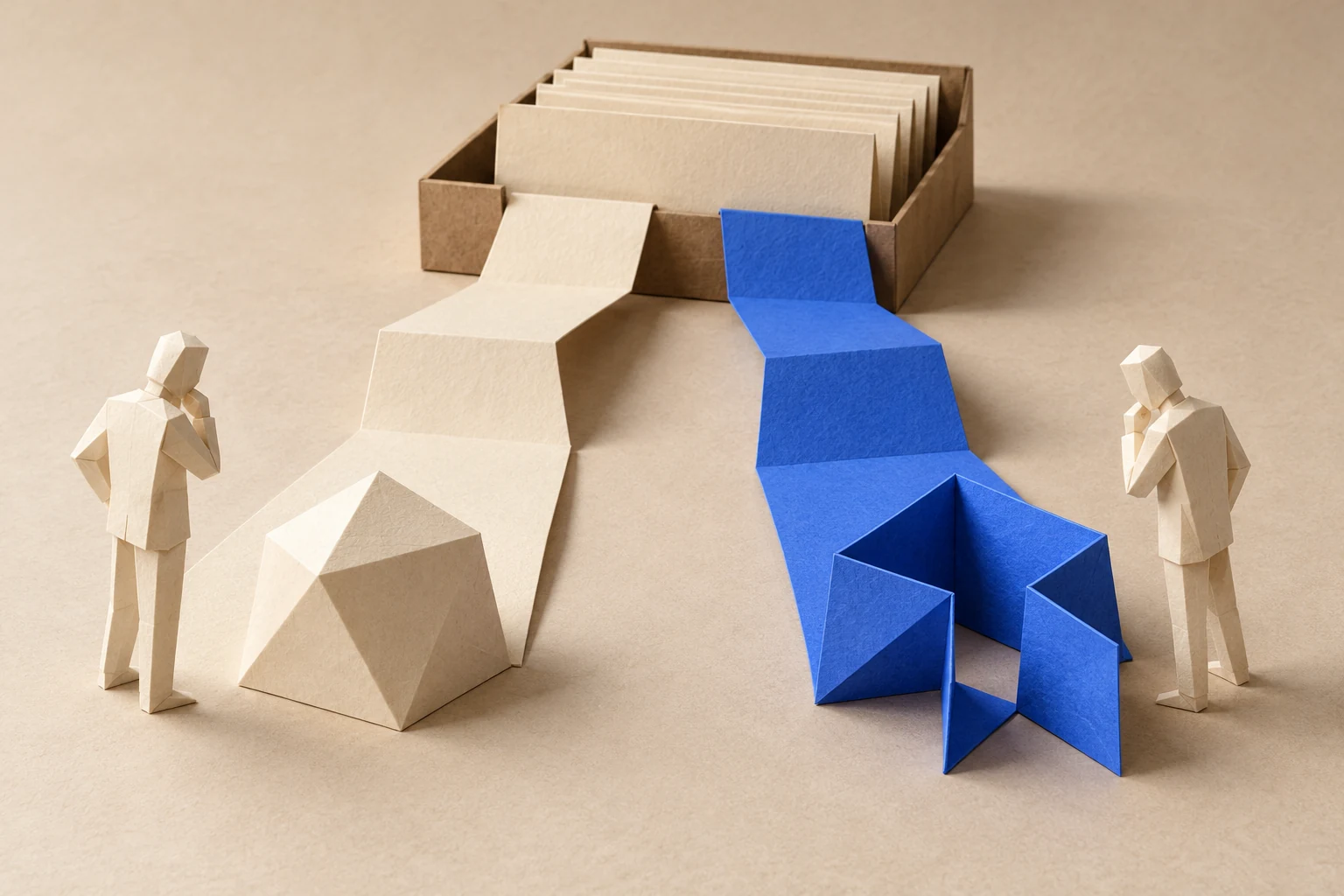
Take a hypothetical acquisition where a small number of customers account for much of the revenue. The deal team may see durable relationships that justify confidence. A separate review might question how much those relationships depend on the current owner. Both views could fit the same accounts. They lead to different questions about what the buyer is actually acquiring.
The committee could then ask for evidence about those customer relationships before proceeding, or make the dependence explicit in the terms it is willing to accept. An AI that identifies that disagreement has given the meeting something specific to work on. A longer description of the customer base would leave the committee to find the issue itself.
Blackstone’s use of its own past debates also interests me. A company’s earlier decisions contain more than the final recommendation. People may have raised an objection, accepted a risk or disagreed about an assumption. Making that reasoning available during the next review could help a team revisit a question it would otherwise overlook. It could also repeat an old blind spot, so I would want to examine the cases the AI draws on and why they apply now.
There is a practical cost to adding a second memo. Someone has to read it, establish whether its claims hold and decide which differences deserve attention. I would keep track of the questions it caused the committee to investigate and the decisions it changed. That would help show whether the extra preparation was earning its place in the meeting.

Bloomberg’s report does not establish whether this process has improved Blackstone’s decisions. I would like to know where the AI has disagreed with a deal team and what happened next. Was an assumption checked? Did the team revise its case? Did the committee proceed with a clearer understanding of a risk it was accepting?
That is the part I would explore in other company decisions too. Give the AI access to the evidence and the relevant history, ask it to form a view, then bring the differences into the discussion while there is still time to act on them. The people making the commitment should be able to explain which parts of that additional view affected their decision.