Canva is turning its design knowledge into an AI product
Copying Canva’s editor would give you a set of design tools. It would not automatically give you the professionally made templates and designers’ feedback that Canva says it used to develop its new image model, Craft.
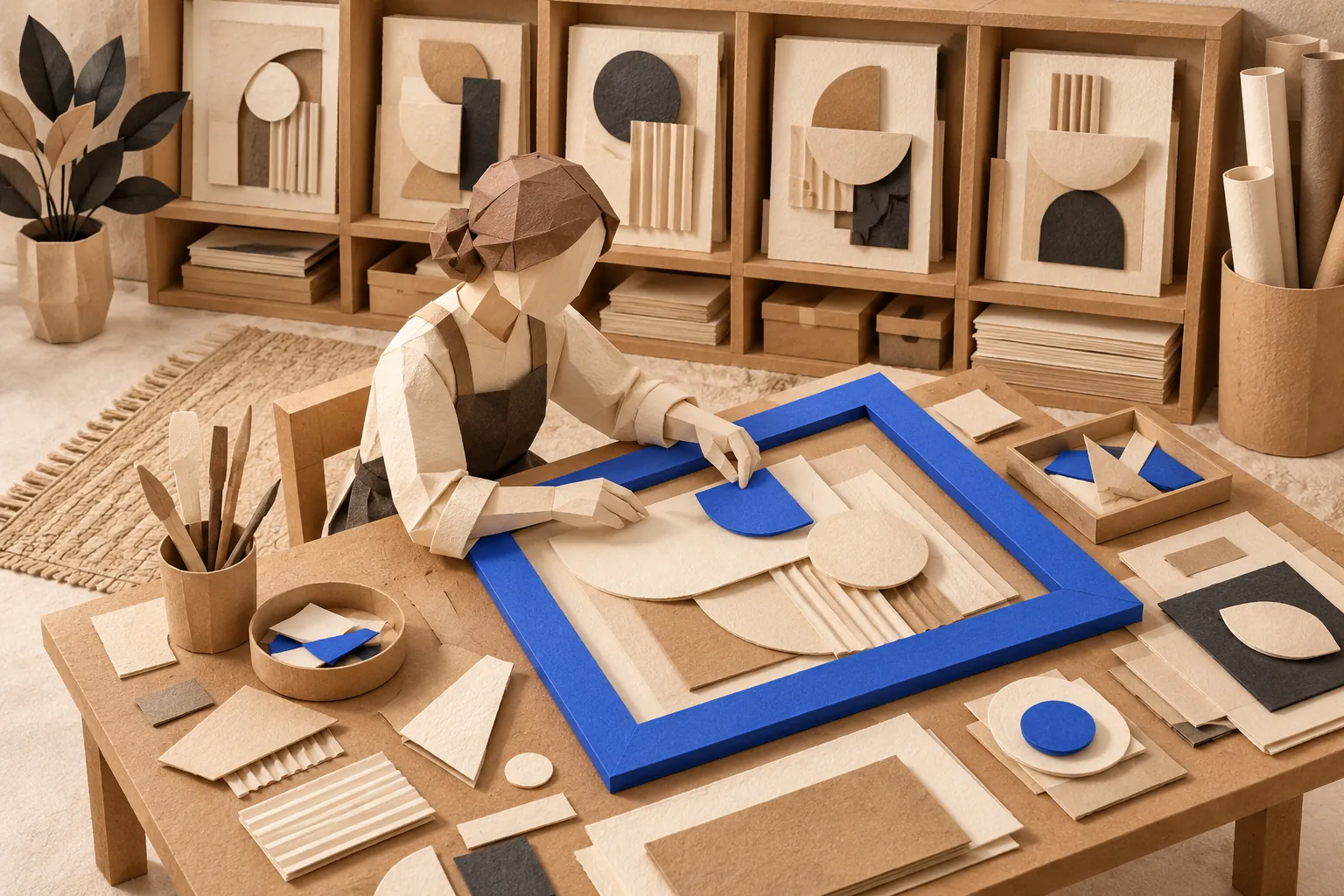
Copying Canva’s editor would give you a set of design tools. It would not automatically give you the professionally made templates and designers’ feedback that Canva says it used to develop its new image model, Craft.
That is the part I would pay attention to if I were running a software business. Canva is putting material and judgements from its existing design work into the product that will do more of that work.
What the company can teach the model
Canva says Craft’s training includes millions of human-made templates from its content library. These contain structured examples of layout and typography, beyond what a collection of photographs would provide. Its professional designers also helped refine the model and compared more than 25,000 pairs of images during internal evaluation. When automated evaluations disagreed with the designers, Canva says it followed the designers. Canva’s Craft announcement describes that process.
A template contains choices. Someone decided what should be prominent, how much room the text needed and how the elements should relate to each other. Comparing two outputs adds another kind of information: which result a designer prefers for the task.
Those choices can help a company define the result it wants its AI to produce. A large archive becomes more useful when the company can identify the work worth learning from and evaluate what comes back.

I would want to see that distinction in a software company’s AI plans. Saying that you have years of customer data tells me very little about what you can teach a model. Which part records a useful decision? Can you distinguish a good result from something a customer reluctantly worked around?
Consider a sales product with an archive of proposals. A proposal attached to a won deal is not necessarily a strong proposal. The customer might have bought because they already trusted the supplier, or because a competitor could not meet a deadline. Treating every won proposal as a good example could teach the model the wrong lesson.
I would want people who understand that work to examine the proposals themselves. Did the proposal describe the customer’s problem accurately? Could the buyer understand the assumptions in the value case? Those judgements offer a more specific basis for improving the next proposal than the final deal status alone.
The product still has to help someone finish the work
Canva also describes Craft as part of an editing process. Its outputs are suited to Magic Layers, which can turn images into editable elements. Craft is available through a public API as well as within Canva. The company can therefore offer the model to developers building other products, beyond its own editor. The launch details make both routes explicit.
For a customer making a campaign, generating an attractive image leaves several decisions open. They may need a different headline, a changed price or another format. An output that can be adapted has a different use from a finished picture that must be generated again each time something changes.

That is where I would look for the commercial value: how the model and the surrounding product help the customer reach a usable result. A leaderboard position can tell us something about the comparisons in that benchmark. It cannot establish how well the product will handle a particular company’s campaign work, or what the company will pay for that help.
Experience needs to become usable
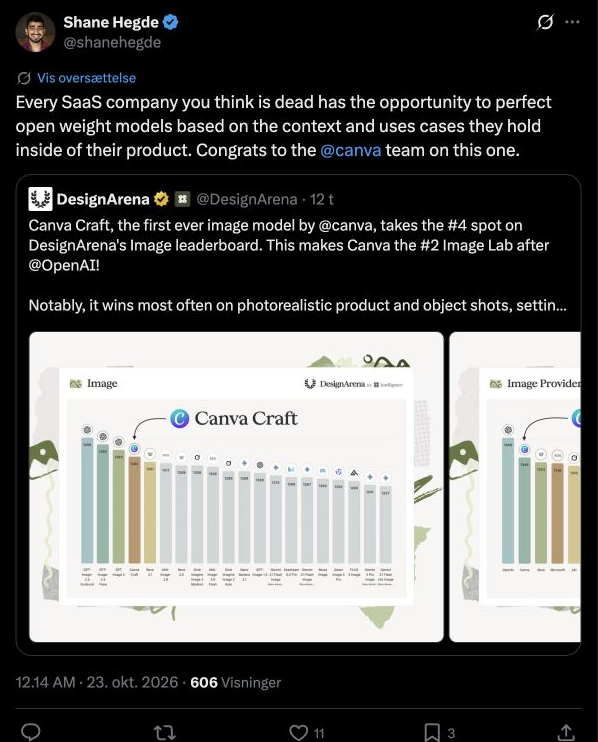
Shane Hegde’s observation on X is that SaaS companies have an opportunity to improve models using the context and use cases inside their products. Canva gives that argument some substance, although the implementation matters. Canva describes Craft as trained from scratch. In a separate image-to-video system, it says it improved an open-weight model with proprietary data. These are different investments, as its research overview explains.
I would not turn Canva’s example into a recommendation that every software company should build its own foundation model. I would use it to examine what the business has learned that a new competitor would still have to work out.
That could include examples of work experienced people consider good, the distinctions behind their choices, and a product that lets customers apply and revise the result. The company needs to show how those assets improve the work. Their existence alone does not make an advantage durable.
This leaves the uncertainty about the software industry intact. Competitors can develop their own examples and expertise. Customers can find other ways to get the result. Canva’s announcement establishes neither future margins nor protection from competition.
But it does give a software leadership team a more useful assignment than listing the features it has spent years building: find the parts of that work that can help the next model produce a better result for the customer. Then establish whether the business can turn that improvement into something customers choose and pay for.