When clients can do the research themselves
AI can help both of us arrive with more of the preparation done.

Research and analysis are parts of the work my clients can increasingly do themselves with AI. I want that to change how we use our time together.
I am also putting as much of my own experience as possible into my AI Wingman, built using Claude Code and ChatGPT Codex. That includes how I question a problem. I want it to understand how I think and get better at using that experience in the work we do.
Matt Shumer argues that startups are selling work agents already do themselves. I think advisers should examine their own work with the same question in mind. A client who can prepare a substantial part of the analysis with AI has reason to expect something more from the time they spend with me.
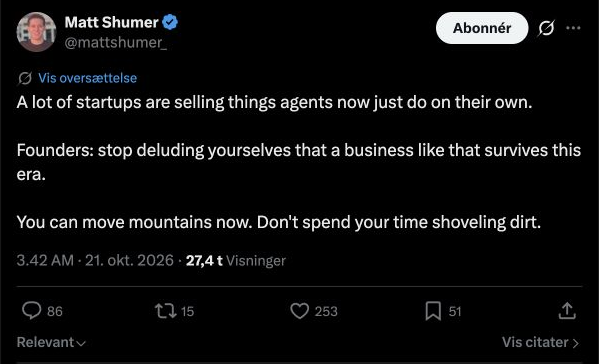
In a conversation with the leaders of an IT services company, we discussed the growing availability of open-source agents and reusable AI skills. One concern was how much effort they should put into developing skills themselves when so much was already available.
I had been speaking with some of their experienced practitioners. They had views about how to do the work that went beyond the vendor documentation. That gave us something specific to examine: which parts of their experience could be captured in instructions their agents could use?
I raised that possibility, and another person in the meeting picked it up as a way to think about the company's own intellectual property. We were discussing how the business could use the knowledge its people had already developed through their work.

Later in the conversation, I asked how much of the transition they could handle with existing competencies, what would require retraining and where they would need to hire. Those questions put the proposed change alongside the organisation they actually had.
That is how I want to use my experience with a client. I listen to their account of the business, put what I know against it and ask questions. Their answers can change my understanding too. We work out what needs attention and what they are prepared to do about it.

The client should be able to see what my involvement contributes to those choices and the work that follows. That is what I want the fee to pay for.
AI can help both of us arrive with more of the preparation done. I want to use that capability and keep putting more of my own experience into it. When I sit with a client, I am there to listen and think with them about what actually needs doing in their business. I expect AI to help us carry more of that work forward too.