ChatGPT Business Agents need a commercial owner
An agent answering for your company needs the offer and the delivery team to agree.

A ChatGPT Business Agent needs someone in the business to own the information it uses and the answers customers may rely on. The launch decision includes who updates an offer when its price, availability or conditions change.
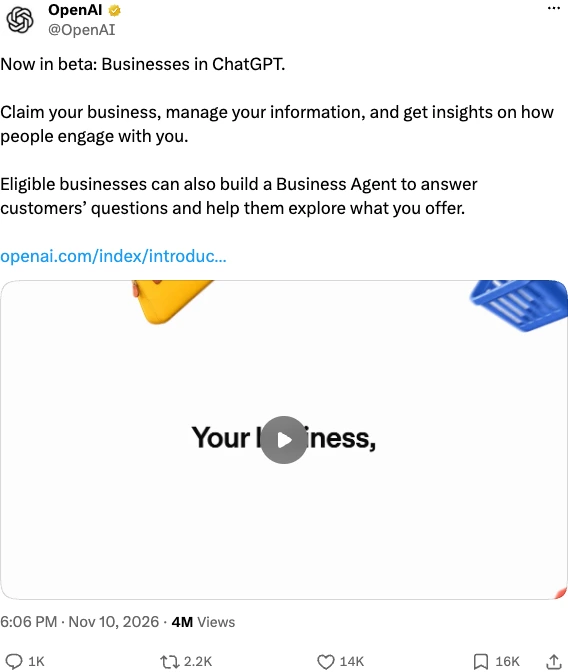
OpenAI announced Businesses in ChatGPT, a beta that lets eligible companies claim a business profile. Its launch explanation distinguishes that profile from a Business Agent. Claiming is available to eligible businesses where ChatGPT is available. Agents initially cover eligible ecommerce and online service businesses in the United States.
Whose answer is the customer reading?
The Business Agent represents the company. OpenAI says its conversation is labelled and separate from ChatGPT's independent answers. A company can also sponsor an agent as an advertising destination.
That creates a customer-facing responsibility for the seller. Suppose a business sells a training workshop. A customer asks whether the quoted price includes adapting the material for their team. The business needs to decide what the offer covers before it asks an agent to explain it. An answer that sounds clear can still leave the customer and the delivery team expecting different work.
This is a hypothetical example. The useful test is whether the person responsible for the offer and the person delivering it accept the same answer. If the answer depends on the customer's situation, decide what the agent should ask and when a person needs to take over.
Who changes an answer when the offer changes?
The person responsible for the offer needs a way to update the information the agent uses. OpenAI's business information policy requires submitted information to be accurate and kept current.
In the workshop example, imagine that the business stops including a preparation call in its standard package. Before updating the price description, identify everywhere the old inclusion could still be stated. Ask the agent the same customer question after the change and have the offer owner check the answer. Record what remains uncertain before customers rely on it.
Use the questions that could change a buying decision. For this workshop, that could be what is included, how delivery dates are agreed and which requests need a separate quote. The business still needs a person who can resolve a request that falls outside the published offer.
A test of those answers establishes what happened in those conversations. Keep checking when the offer changes and investigate actual disagreements between an answer and what the team can deliver.
What would count as a useful customer conversation?
A useful result is a customer who can make a better-informed next decision about the offer. Decide which next step the business can actually fulfil before measuring it.
OpenAI says Business Hub provides aggregated mentions, website clicks and discovery topics subject to thresholds. It says it does not share users' conversations or Business Agent chats with businesses. Those dashboard measures therefore need to be read alongside whatever enquiries and outcomes the business can itself verify.
For the hypothetical workshop, a suitable enquiry might include the team's need and a request to discuss dates. A mention of the company tells the seller less about whether someone understood the offer or wanted to buy it. Give each observed result its own meaning when building the AI business case.
Before putting a Business Agent in front of customers, the commercial owner can bring the proposed offer and a few difficult buyer questions into an AI advisory discussion. That makes the responsibilities and the first test specific enough to examine.