What a cloud marketplace changes in an enterprise sale
Before investing in a marketplace listing, find out which part of your customer's purchase it would make easier, and which decisions would still remain.

When an enterprise buyer asks whether your software is available through a cloud marketplace, my first question would be what becomes easier for them if it is. They may have a purchasing arrangement they can use. I would want to understand that arrangement before committing the team to another sales channel.
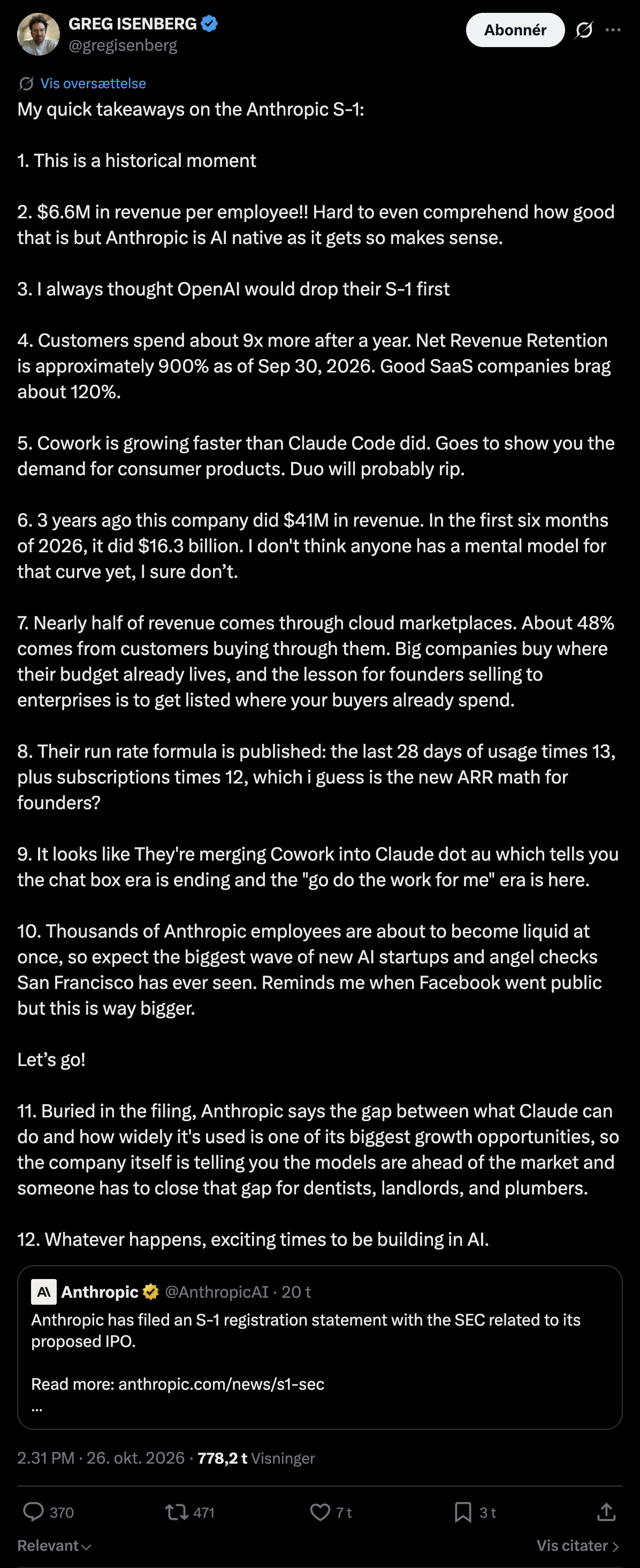
Greg Isenberg points to cloud marketplaces in his takeaways from Anthropic's S-1. His advice to enterprise software founders is to get listed where their buyers already spend. The scale makes that worth examining: Anthropic reports that approximately 48% of its revenue came through cloud service provider marketplaces in the first six months of 2026.
The filing also describes the work behind that route. The platforms bill customers, collect payment and remit it to Anthropic after fees. Anthropic generally retains separate contracts with those customers. It warns that marketplace procurement, security and billing workflows, involving multiple counterparties, can add complexity. A marketplace can be a substantial channel while leaving a considerable amount of buying work to do.
Suppose a customer has evaluated your product and says they would prefer to buy it through their cloud account. This is a hypothetical situation. I would ask them to walk me through how that purchase would happen, ideally with the person in procurement who would handle it. Where would the order start? Whose approval would it need? What would still have to happen before the team could use the software?
The useful answer names a specific obstacle the marketplace removes. Perhaps procurement can use an established billing arrangement and avoid setting up another payment route. That could make the purchase easier to carry out. It still leaves the question of who authorises this expense and which part of the organisation pays for it.
An existing cloud budget also needs examining. If the buyer expects the software purchase to count towards a cloud commitment, have them check the particular product and offer against their agreement. I would want that answer before putting it in a proposal or forecasting a close. The phrase 'we have budget with the cloud provider' leaves too much unresolved on its own.
Then I would separate the billing arrangement from the product relationship. Who signs the software terms? Which security review still applies? Who answers if the service fails, and who handles the renewal? In Anthropic's case, the platform's role in collecting payment coexists with a direct customer contract. For your offer, the buyer needs to understand the actual arrangement they would enter.

This belongs in discovery. A Sales Engineer can help establish what the customer's security and architecture teams need to approve. The account executive can work with procurement on the order and commercial terms. Both need the same account of what remains before purchase. Otherwise, a preferred payment method can easily become an assumed completion date.
For the seller, the comparison is with a direct purchase for that same customer. What work disappears? What work moves to someone else? What new work does the marketplace require? Writing down the two routes makes it possible to judge whether a listing addresses a problem the customer actually has.
If procurement confirms that the marketplace would remove a difficult supplier payment setup, that is a concrete reason to investigate it. If the delay is a security objection to how your product uses data, work on that objection with the customer. A different invoice will not answer it. The next action follows from what is holding up this purchase.

The founder also has to account for platform fees and the team's work to establish and maintain the channel. I would compare that cost with the purchasing effort it saves the customers we want. Who will manage the offers and renewals? How dependent would we become on the platform's terms? Anthropic explicitly identifies changes to these relationships as a risk to customer access and costs.
Anthropic's revenue share shows how significant this route can become. It does not establish why each customer chose it, or what a listing would do for another software business. I would test Greg's recommendation in actual purchasing conversations. If several suitable customers can name a barrier the marketplace removes, the team has something specific to evaluate and a reason to do the work.