10 resources for pricing freelance services
A rate calculator, a guide to project fees and a cash-flow forecast answer different questions. Choose the one that fits the decision in front of you.

Start with Toggl or Xero if you need a rate grounded in your available time. Stripe helps you compare a project fee with hourly work; the SBA market-research section helps you ask what customers are looking for. Use the quote and cash-flow resources when you need to agree the work and plan when payment arrives.
These ten resources cover different parts of that decision for people selling their own services. The selection uses public guides and tools that explain an approach or let you work with your own figures. They are not a ranking, and none can tell you what a particular customer will pay. For the decision on a specific assignment, start with how to price a freelance project.
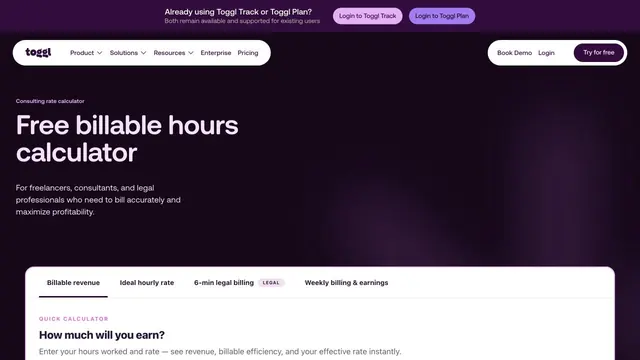
1. Toggl Billable Hours Calculator
Toggl's calculator compares billable revenue with the time that goes into earning it. It has separate views for billing and estimating an hourly rate. Use it to see how time spent finding work or handling administration changes the picture behind a quoted rate.
The result depends on the hours and costs you enter. It is a financial starting point, not evidence that your clients will accept that rate. Toggl also sells time-tracking software, so the page has a commercial interest in that part of the workflow.
2. Xero freelance pricing guide
Xero's guide walks through day rates, fixed project fees, retainers and value-based pricing. Its day-rate calculation starts from an income goal, adds costs and then divides the total across billable days. That can help when you are comparing a previous salary with the income your own business needs to generate.
The tax and National Insurance references are UK-specific. Replace them with your own local obligations and use your own estimate of the days you can sell, rather than treating the guide's example as your calendar.
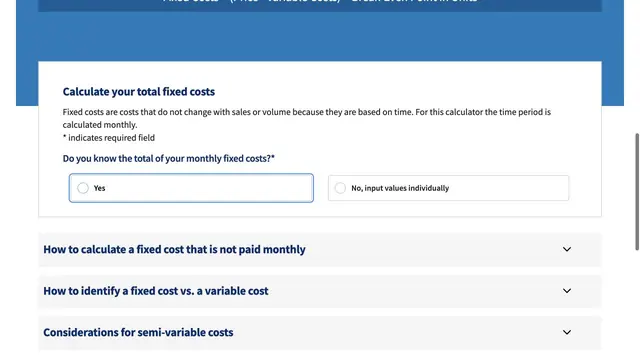
3. SBA break-even calculator
The US Small Business Administration's calculator estimates how much needs to be sold to cover fixed and variable costs. It is useful when you want to test how many assignments at a particular price would be needed to cover the business's costs.
A service business with different types of work may need more than one calculation. The result also depends on your assumed costs and sales mix; it is not a forecast that those assignments will arrive.
4. Stripe's agency pricing options
Stripe's guide to starting an agency compares hourly rates with project-based fees and discusses their trade-offs. Look at this section when the work could be sold either way: the question is how much of the scope is known and who carries the risk when the work takes longer than expected.
The guide covers agency formation more broadly, so not every section will fit a solo practice. Its pricing examples help you compare models; they do not replace estimating the actual assignment.
5. MadLabz Pricing & Profit Calculator
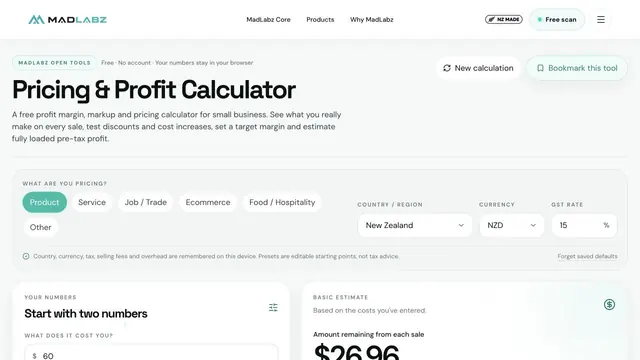
MadLabz's calculator lets you compare the contribution from a sale before and after a discount. It includes a service option and a way to enter overhead separately. Use it when a customer asks for a reduction and you need to see what changes in the work's economics.
The result is an estimate based on the figures and tax settings supplied. Check which costs you have already included so you do not count them twice, and use the settings appropriate to your own situation. It cannot tell you whether offering the discount is the right commercial choice.
6. Stripe's guide to value and pricing
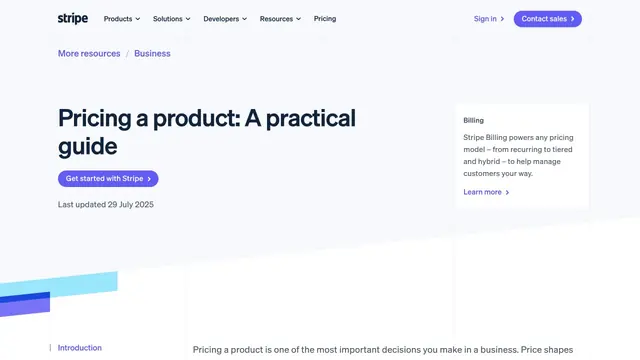
Stripe's product-pricing guide includes a section on value-based pricing. Use it to prepare a conversation about what the customer expects to gain and what evidence would make that benefit credible, before choosing a price that reflects it.
The guide is written around products as well as services. Use the value question for your work, but do not turn a possible customer benefit into a promised result or assume that the full estimated benefit is attributable to you.
7. SBA market-research section
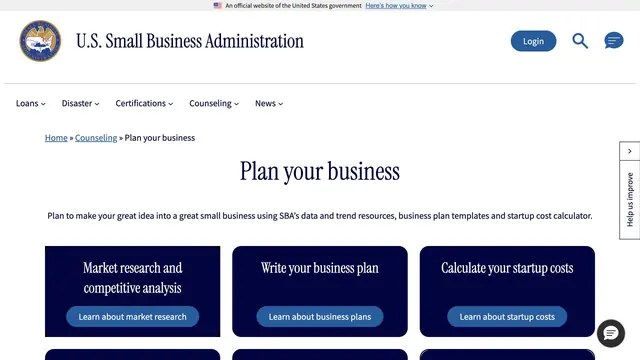
The SBA's planning page asks what customers need, what alternatives exist and what people pay for them. It also distinguishes existing information from research you do directly with potential customers. That makes it a useful next step after calculating a price from your own costs.
The page is broad and US-oriented. Its examples and data sources may not suit your market; conversations and comparisons relevant to your actual customers still need to be done.
8. Business.gov.au guide to quotes
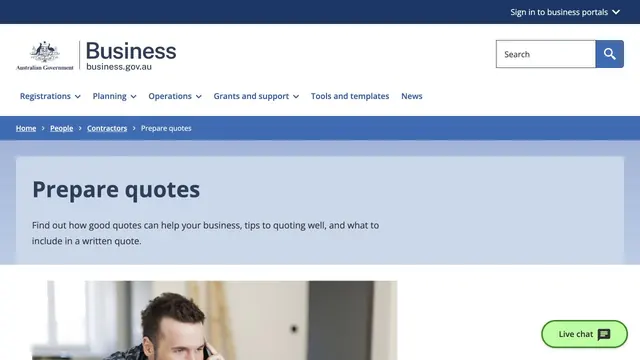
Prepare quotes explains what to put alongside a price: the work, timing, variations and payment terms. Use it when a number is ready but the customer could still reasonably be unsure what that number includes.
The guide is for Australian contractors, including country-specific identification and tax references. Adapt the commercial questions to your work and check the requirements where you operate rather than copying its legal instructions wholesale.
9. Freelancers Union guide to getting paid
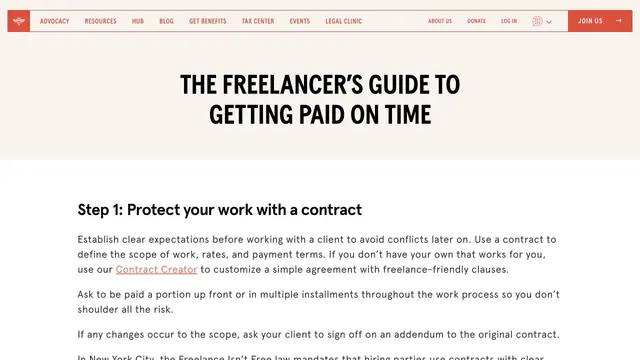
The Freelancer's Guide to Getting Paid on Time connects the agreed fee to scope, payment timing and written changes. It is worth reading before accepting a project whose payment arrives only after a long piece of work.
The guide refers to US and New York rules; those are not universal. A deposit or payment schedule may change the risk for both parties, but it needs to fit the assignment and be agreed with the customer.
10. Business.gov.au cash-flow statement
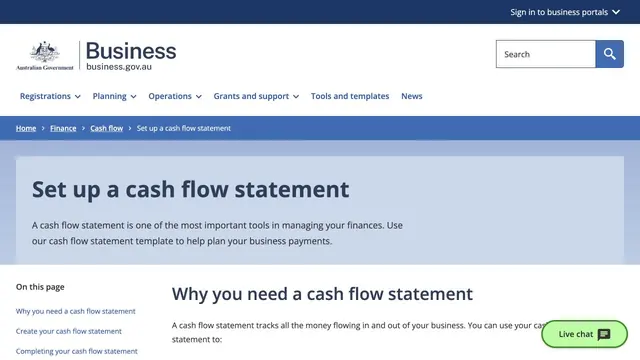
Set up a cash flow statement includes a downloadable template for mapping when money is expected in and when it must go out. Use it to check a price alongside the payment schedule, especially if the project has expenses before the client pays.
A forecast is built from estimates, not guaranteed receipts. The template uses Australian tax terminology, so adjust it for your own business and local advice. It will not decide whether the work is worth taking on.
A price has to work in the customer's decision and in the life of the person delivering the work. If the numbers fit only when every available hour is sold, or if the agreement leaves the scope open, that is useful to know before accepting the assignment. The coaching conversation can be a place to work through what you want the business to support and the choices in front of you.
Sources
- Toggl Billable Hours Calculator
- Xero freelance pricing guide
- SBA break-even calculator
- Stripe's agency pricing options
- MadLabz Pricing & Profit Calculator
- Stripe's guide to value and pricing
- SBA market-research section
- Business.gov.au guide to quotes
- Freelancers Union guide to getting paid
- Business.gov.au cash-flow statement
Sources checked on 29 October 2026.