What belongs in an AI-assisted decision memo?
A shorter note still needs to show why the author chose one option.

An AI-assisted decision memo should show what the author recommends and which fact would change that recommendation. A reader needs enough of the reasoning to disagree with the choice before the team acts on it.
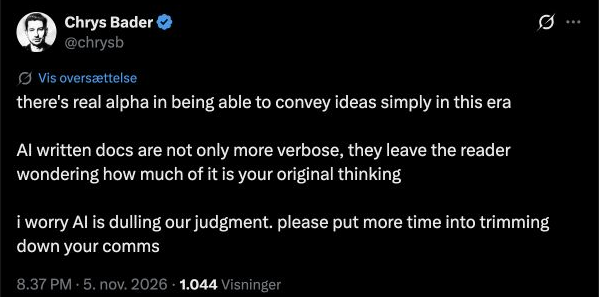
Chrys Bader worries that AI-written documents can be wordier and make it harder to tell what the author thinks. Shortening the note can help. The difficult edit is knowing which detail needs to stay because it explains the choice.
What should the recommendation say?
Name the option you want approved and the constraint that tipped the decision. Take a hypothetical team choosing where to spend its next month on customer onboarding. Support wants a searchable library of answers. The onboarding lead wants to spend the time fixing one step that prevents customers from getting started.
A memo might recommend fixing that step first because the team has seen customers reach it, fail to complete it and ask support to do it for them. The library could still help with questions elsewhere. The author is choosing to spend the month on an obstacle the team has observed, and is accepting that other support work will have to wait.
That reasoning gives the support lead a useful place to push back. Perhaps the cases all came from one customer with an unusual setup. If so, the evidence may justify helping that customer before it justifies changing the process for everyone. Keep the source of the observation beside the recommendation, so a reader can see which case the argument depends on.
What would change the decision?
Write down the result that would make you put the other option first. In this example, the onboarding lead could check the next few cases with Support. If customers can already finish the step once they find the right instructions, the team has a reason to try making those instructions easier to find before changing how the step works.
The test should be possible before the commitment becomes hard to undo. Name who will look at the cases and when the team will decide how to spend the month. If the team must decide before the cases come in, state the assumption it is making and agree when to review it. A reader can then approve a provisional choice without mistaking it for a settled diagnosis.
AI can help cut repeated background and make two options easier to compare. On the final read, check that the reason for the choice and the evidence that could overturn it are still there. In the onboarding example, cutting the part about an unusual customer setup would make the recommendation sound firmer while removing the question the team most needs to answer.
An independent second memo can challenge a recommendation before a meeting. The author of the first note can make that work easier by saying where the evidence is thin. That gives the group a dispute it can resolve: whether the onboarding step itself blocks customers, or whether the instructions are hard to find.