Business case for a software purchase: what each part needs
A business case for a software purchase answers five questions: why change now, which options, value for money, affordability and delivery. Bring evidence to each part, and leave out the numbers approvers will discount.

Each part of a business case for a software purchase needs its own evidence, and the seller can supply some of it to the champion who writes the case. Haringey Council's full business case for a new ERP system, put to its Cabinet in July 2026, assumes no cashable savings at this stage. Sheffield Health and Social Care NHS Foundation Trust asked its board to fund a £3.15m cost pressure. Its business case projected that savings from the new patient record system would later cover costs.
The five questions a software business case answers
Approvers check five things: why change now, which options were compared, whether the chosen one is value for money, whether it is affordable, and whether it can be delivered.
Public bodies such as councils and NHS trusts work under procurement law. Many of them build their cases on HM Treasury's Five Case Model, whose strategic, economic, commercial, financial and management cases cover the same ground. For a company, use these questions as a checklist within its own headings and approval limits.
The economic buyer decides on the case: where the business is now, the consequences of staying there, and the outcomes the change brings. The budget conversation starts once the case exists.
Why change now, and what doing nothing costs
Tie the case for change to a date and a consequence the approvers can check.
Haringey's SAP system "was implemented in 2001 and is now approaching end of mainstream support in December 2027." Havant Borough Council's case was for planning, environmental health, licensing and grants software. Its deadline was the existing contract's expiry: "Once the Capita 5cs contract expires in September 2025 the Council will lose access to a range of supporting software".
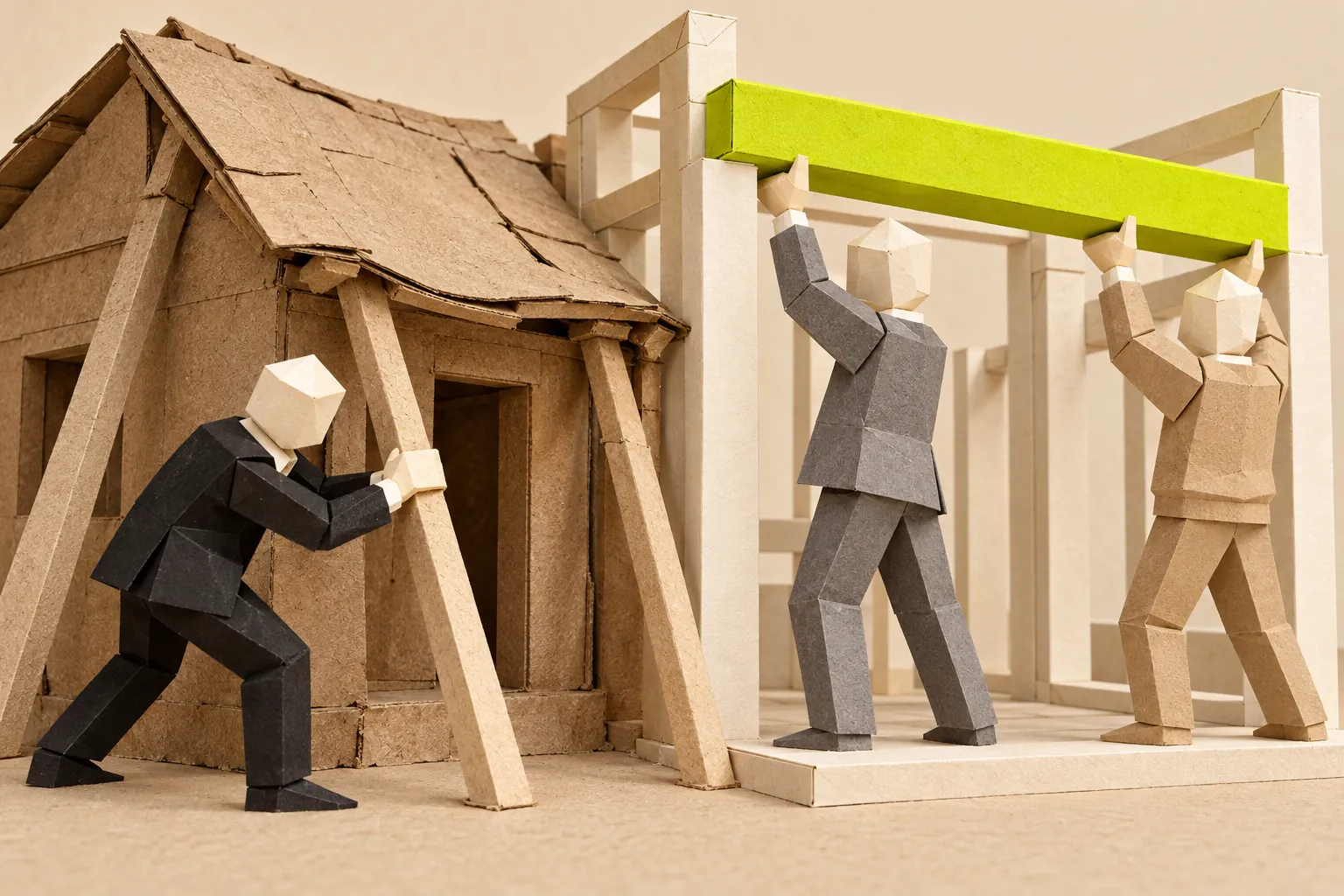
Cost the option of doing nothing alongside the proposed change. Havant's case projected headline costs of about £1.73m for doing nothing over 2024 to 2028, against about £579,000 for replacement software.
The seller can bring the consequences in the customer's own words and the source of the date, such as the supplier's support notice or the contract term. Do not present a cost of waiting derived from industry averages as the customer's own figure.
The options your offer is compared with
Before the buyer compares suppliers, its case compares ways of meeting the need, and doing nothing and the current supplier are among them.
Haringey's case weighed five options. The council could keep the current system, award the work directly to the existing supplier, run a competitive procurement, buy separate systems for different functions, or join a shared service. The direct award was not preferred because "it would reduce competitive tension, limit pricing and commercial leverage". Southwark Council's options for its ERP system included upgrading to SAP's newest version. The council judged that this "would be equivalent in every sense to the implementation of a new cloud ERP system".
Ask how bids will be scored. Sheffield Health and Social Care weighted its quality evaluation 50 percent for the output based specification, 40 percent for a sandpit demonstration and 10 percent for an executive presentation. It compared the bids on cost per quality point.
Help the champion write the capabilities the buyer needs so that any credible solution could meet them, and bring facts about what changing from the current system involves. Leave out criteria that only your product can pass: they make the options appraisal look decided before it was done.
Separate cash and capacity when judging value for money
Show separately what would come off the budget, which future costs would be avoided and where staff time would be freed.
Sheffield Health and Social Care's case projected about £13.6m of cash releasing benefits over ten years and about £29.6m of benefits that would release no cash, such as time freed. Other approvers may use different labels; show which amounts would actually come off the budget.
Its projected benefit to cost ratio was 4.0 before adjustments for risk and optimism bias, and 2.6 afterwards. The case also assumed full realisation of its cash benefits. At 50 percent realisation, it projected around £6.8m of additional pressure on its income and expenditure budget over ten years.
Haringey's case stated: "No cashable savings are assumed at this stage". Havant's case estimated that freed planning officer time could be used for commercial work at £500 a day, projecting £115,000 of income over the contract term.
The seller can bring the customer's baseline and proposed measures of change, with the product's numbers kept apart from the business numbers they affect. For each benefit, name an owner, when it should appear and what budget or workload would change. Show what happens if less of the benefit is realised. Do not count staff time as a cash saving unless the case explains what spending would fall.
Affordability, year by year
Check affordability apart from value for money, as HM Treasury's model does: can the budget carry the costs in the years before the savings arrive?
Sheffield Health and Social Care's board was asked to fund both the capital and a £3.15m cost pressure in years 0 to 3, "before cash releasing benefits cover costs". Haringey's costs included "keeping the existing SAP solution running until such time as the replacement system is fully implemented". The report also flagged a revenue budget increase from go-live in July 2028.

Bring a cost profile by year. It shows one-off and recurring costs, the period when old and new systems run side by side, when the subscription starts and the buyer's own internal costs. Leave out a single total or a monthly price without the years.
Delivery and the people it needs
Approvers ask whether the change can be delivered, and that depends on the buyer's own people as much as on the supplier.
Havant's highest-scoring risks included data migration resource, recruiting a programme manager in time and the market's capacity to deliver. On the market's capacity, the register noted that many local authorities were going through similar exercises and a number were "reporting supplier capacity issues and consequential delays". Sheffield Health and Social Care reported "a very high risk" that it would not recruit its project staff in time. Haringey's procurement strategy notes that "different supplier delivery models can materially affect the level of dependency placed on Council resources".
The seller can bring an implementation plan that names the roles and time the buyer must provide and the approach to data migration. The plan says which team will do the work and when it can start. Customers of similar size who have gone live can be named as references. Leave out a timeline that assumes the buyer's staff are free.
A business case template for a software purchase
Use this table as the template for the case your champion is writing.
The parts of a Value Framework map onto the case: current reality onto why now, required capabilities onto the options, and business outcomes onto value for money. The buyer's budget profile and the evidence for delivery have to be added.
| Part of the case | What approvers check | What the seller can bring | What to leave out |
|---|---|---|---|
| Why now | What approvers check A date and a consequence they can verify | What the seller can bring The customer's consequences in their words, the source of the date | What to leave out Industry averages presented as the customer's own cost of waiting |
| Options | What approvers check Doing nothing, the current supplier and other routes, compared on what the buyer needs | What the seller can bring Capabilities any credible solution must meet, facts about changing from the current system | What to leave out Criteria only your product can pass |
| Value for money | What approvers check Cash released, costs avoided and time freed, with assumptions and shortfalls made explicit | What the seller can bring The customer's baseline, proposed measures, benefit owners and timing | What to leave out Unexplained cash savings or full realisation with no shortfall scenario |
| Affordability | What approvers check Costs and savings by year against the budget | What the seller can bring A cost profile by year, including running old and new side by side | What to leave out A single total without the years |
| Delivery | What approvers check The buyer's people, the supplier's capacity and the risks | What the seller can bring A plan naming the buyer's roles and time, references from similar customers | What to leave out A timeline that assumes the buyer's staff are free |
Sources
- Guidance on Developing Business Cases for Projects and Programmes. HM Treasury, 2026.
- ERP Replacement Programme: Full Business Case and Approval to Procure. Haringey Council, 14 July 2026.
- EPR Full Business Case: summary for Trust Board. Sheffield Health and Social Care NHS Foundation Trust, 22 December 2021.
- Place Service Software Procurement: Full Business Case. Havant Borough Council, November 2023.
- Gateway 0: Strategic Options Assessment for the replacement of an Enterprise Resource Planning system. Southwark Council, 9 April 2024.
- MEDDIC, the way to reverse engineer a purchase decision (episode 105). The SaaSiest Podcast, 3 October 2023.
Facts last checked on 27 October 2026.
Updated 27 October 2026.