When can you count AI cost savings?
How a smaller bill can overstate the effect of a lower rate.

A lower supplier fee becomes a measured saving once the new rate appears in what you are charged. A proposal and an agreed rate can both inform a forecast, but each gives the business a different degree of certainty.
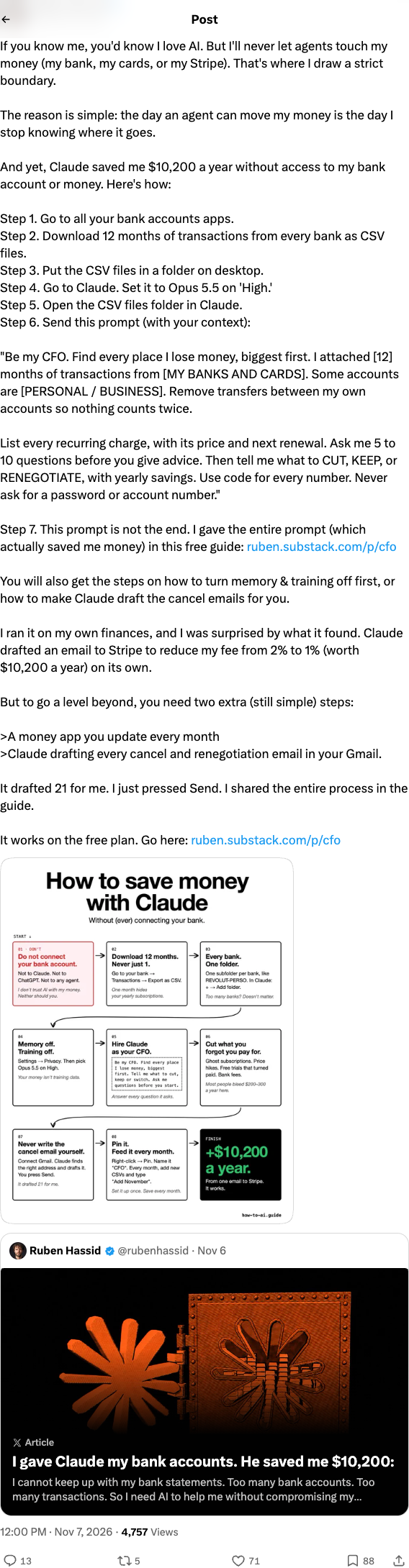
Ruben Hassid describes using Claude to draft an email asking Stripe to cut a fee from 2% to 1%, a difference he values at $10,200 a year. His post describes the draft and the projected value. It leaves open what rate Stripe agreed to and what he was subsequently charged.
What has the supplier agreed to?
A written rate and an effective date tell you what to expect on the next bill. A drafted email tells you what you could ask for. Keep the two in separate columns, especially when an estimate goes into a budget before the supplier replies.

Take a separate example with round numbers. A business pays a 2% fee on $100,000 of monthly sales. At the same volume, a rate of 1.5% would reduce the fee from $2,000 to $1,500. That makes $500 a month a useful estimate for deciding whether to pursue the change. If the supplier agrees to the rate, check which sales it covers and when it takes effect before updating the budget.
What did the business actually save?
Compare the new charge with what the old terms would have cost on the same sales. If sales fall to $80,000 and the new fee is $1,200, the bill is $800 lower than the month before. But at the old rate those same sales would have cost $1,600. The lower rate accounts for $400 of the difference.

Write down where that figure came from and the period it covers. If you carry the saving into an annual forecast, say what sales volume you assume and when you will check it again. The guide to evidence and assumptions in an AI business case shows how to keep that forecast separate from what you have measured.