Discovery finds requirements while the business consequence remains vague.
Team training on your own deals
Write to me about this (email)At Leapwork I built the Sales Engineering organisation from zero to 20 people in two years, hiring across six countries. Before that I spent ten years in technical presales and solution consulting at NetDesign, Fuze and Nexthink, and at Nexthink I trained the global Solution Consulting team.
In Danish or English, in Copenhagen, at your offices or online.
Team training on your own deals
Write to me about this (email)From Proof of Concept to Proof of Value
Write to me about this (email)Value and proof for senior Sales Engineers
Write to me about this (email)Account executives and Sales Engineers together
Write to me about this (email)Build and Scale Sales Engineering
Write to me about this (email)A complex deal asks three things of the account team.
Whether the product can do what this customer needs, in their environment, and where it differs from the alternatives.
What the change means for the customer’s business and which outcomes the economic buyer will commit to.
Who decides, how and by when, and who inside the customer is carrying the deal.
The Sales Engineer leads the technical puzzle and shares the other two with the account executive. At Leapwork I taught account executives and Sales Engineers to put the puzzles together every week: they went through their deals, named what was missing and left with next steps for both.
Sales Engineering is a discipline of its own, with its own customer conversations, working material and career paths. The training follows that work from the first meeting to the customer’s first months after the decision.
The qualification puzzle often takes its structure from MEDDICC, a widely used third-party framework.
At each stage the Sales Engineer leads part of the work and leaves something the next stage needs. Each stage can also be a training module.
| Stage | The Sales Engineer’s work | What it leaves |
|---|---|---|
| 01Before the first meeting | Researches the company, its recent news, what its executives say in public and the people likely to take part, and agrees with the account executive what the meeting is for. | A pre-call plan |
| 02Discovery | Asks what the customer wants to change, why now and what it is worth to them, and listens for who could carry the change internally. | The business problem in the customer’s words, and a possible champion |
| 03Scoping | Leads technical deep dives, tailored demos and sizing, tests the value with the champion and prepares a go or no-go with the economic buyer together with the account executive. | The minimum required capabilities and written success criteria for a Proof of Value |
| 04Proof of Value | Leads the proof that the product delivers the capabilities behind the customer’s outcomes, with a Business Value Assessment when the deal needs a business case. | The technical win and a value case the economic buyer has seen |
| 05Decision | Joins the executive presentation, leads the security review and prepares onboarding with Customer Success. | A preboarding plan agreed with the customer |
| 06After the decision | Hands over the value presentation and the Proof of Value criteria as the customer’s success plan, and passes product requests from the deal to Product. | A success plan that business reviews can follow |
Engineers and consultants moving into a customer-facing role, new Sales Engineers and Solutions Consultants, Forward Deployed Engineers and technical founders who sell their own product.
A short course, or built into your onboarding over the first weeks.
Participants learn to prepare a customer meeting with the account executive, to ask about the customer’s business before showing the product, and to explain and demonstrate the parts of the product that answer what they heard.
Practising Sales Engineers, presales engineers, Solutions Consultants and solution architects, with their manager.
A focused format, or sessions spread over several weeks with reinforcement between them. Both end with a follow-up once the work is in use on current deals.
Participants learn to work the three puzzles on their current deals, to say what is known and what is still assumed in each, and to agree the next steps with their account executive.
Participants learn to open a demo with what the customer said in discovery, to show the capabilities behind the outcomes the customer named, and to agree the next step with the account executive.
At Fuze I designed demonstrations and validation around the business outcomes and capabilities the customer needed.
Senior and principal Sales Engineers, solution architects and business value consultants.
On current deals, as a programme of its own or as modules inside the training on your own deals.
Participants learn to plan and run a Business Value Assessment, to agree the outcomes of a Proof of Value with the economic buyer and write its success criteria with the customer, and to present the value case to executives together with the account executive.
From Proof of Concept to Proof of ValueAccount executive and Sales Engineer pairs, with Customer Success for the handover.
A working session on your own sales stages, followed by the first weekly deal sessions.
The pairs agree who leads what at each stage of your sales process, including the go or no-go points before a Proof of Value and before the proposal. They set up a weekly deal session that ends with next steps for both, and plan a handover that carries the value case to Customer Success.
Qualification training for the whole sales organisation: Opportunity qualification with MEDDICC
SE team leads and managers, Heads and VPs of Sales Engineering, and executives creating the function.
For SE team leads and managers: hiring, onboarding and coaching in deal reviews.
An engagement for leaders creating a Sales Engineering function or preparing the next stage of growth.
Ongoing advisory for Heads and VPs of Sales Engineering who want experienced advice on live decisions, team development and the wider commercial system.
Students, engineers and professional communities who want to understand the role or strengthen it.
From a guest lecture to a course or a semester programme developed with the university, in Danish or English.
For students it introduces a career path I wish I had known about as a newly graduated engineer.
The SE leader and I choose the deals, the stages to work on and what should be visible in the work afterwards.
We translate them into your own stages, CRM fields, templates and customer language.
The team works on its own discovery calls, demos and Proofs of Value. Each participant brings a current deal. We work it through the three puzzles with the account executive, and the participant leaves with the next customer meeting prepared.
The leader gets review prompts, examples and follow-up material for one-to-ones, deal reviews, onboarding and future enablement.
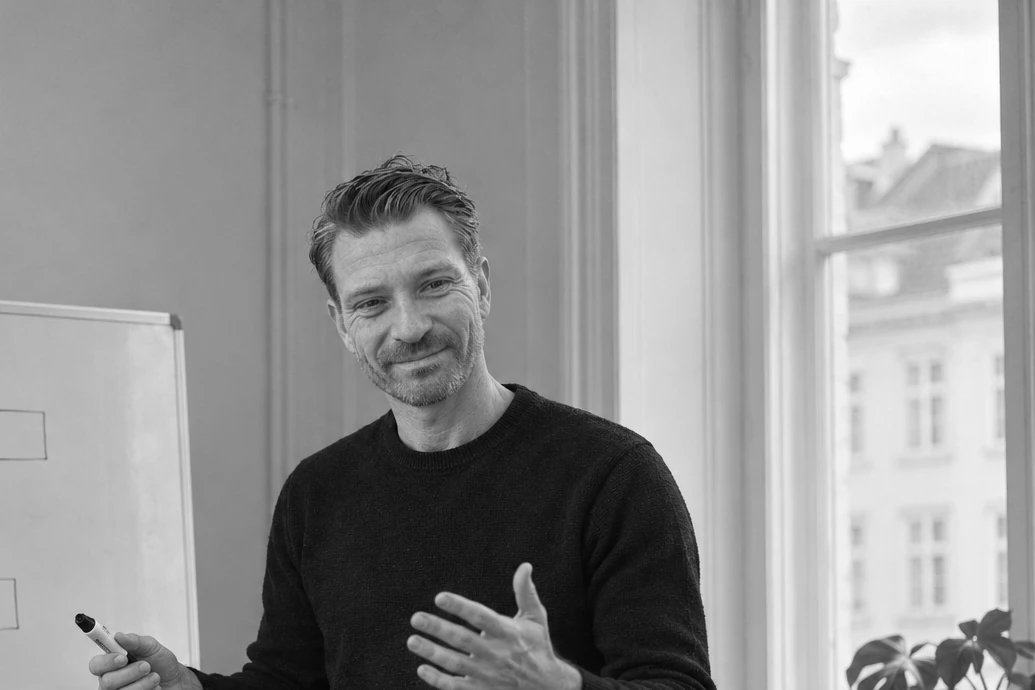
I started as a systems engineer at Cisco in 2005. At NetDesign I led CxO-sponsored discovery and stakeholder interviews and turned them into business cases and technology investment roadmaps. As Senior Pre-Sales Engineer at Fuze I co-launched the Nordic business, led Business Value Assessments with 15 to 20 stakeholder interviews and was selected for President’s Club as one of four pre-sales professionals. At Nexthink I trained the global Solution Consulting team in value pyramids, MEDDIC, 3xWhy and champion development.
At Leapwork I was part of the leadership team. I also developed five leaders, promoted five team members and introduced career paths in Business Value Consulting, Partner Sales Engineering and Principal Sales Engineering.
The material from that work includes hiring standards, training paths, bootcamps, onboarding, Business Value Assessments, opportunity routines, team responsibilities and field-to-product feedback. Some material was authored by me and some by colleagues in the team, reflecting the shared operating practice we built.
In 2016 I took part in Steve Capper’s two-day pre-sales workshop at Fuze. It shaped how I prepare and listen in customer meetings, and I have built my own practice from it since, at Nexthink and Leapwork.
I talked about MEDDIC on The SaaSiest Podcast, episode 105 (October 2023).
Sales Engineers, Solutions Consultants, solution architects and Forward Deployed Engineers, with their managers. Account executives join the sessions on working together, and Customer Success joins the handover.
We agree group size and schedule with you. The sessions work on current deals, so time in the room goes into deals the team is already running.
Yes. I map the three puzzles into the language, stages and manager routines the team already uses, including the qualification framework you use today.
Two or three current deals, recent discovery notes or demo material, and the stages you use in your CRM.
It covers the customer side of the role: discovery, the business outcome a deployment should reach, how the customer decides and what Product should hear from the field. Software engineering and production architecture stay with your engineering organisation.
Yes. It is tailored to the team’s own preparation and follow-up work.
Opportunity qualification with MEDDICC trains the sales team and its managers in the framework itself. Sales Engineering training covers the Sales Engineer’s part of qualification, worked together with the account executive.
I answer as quickly as I can.
The first step is a short call or a coffee. In Copenhagen I am happy to come to your office.