What will customers renew when agents reuse your method?
A method an agent can reuse may be worth selling once. A subscription needs continuing help that customers want and the provider can afford to give.

Once a customer's agent can reuse the method, a renewal needs to pay for help they still want. Danny Postma says he buys books for his AI agents and turns their contents into processes the agents can run. The person paying for the book still wants what it helps them do, but the agent now learns the method and puts it to work.
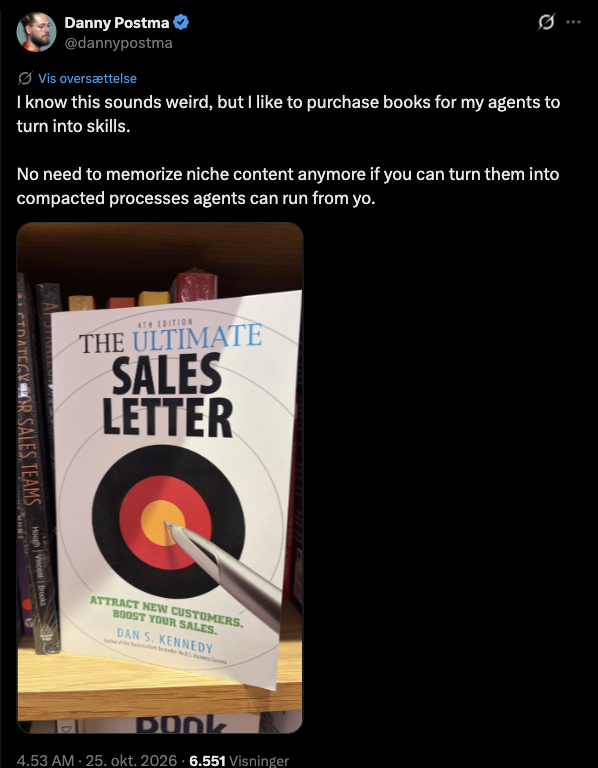
That changes what a seller of expertise is paid for. A course or membership then has to show what it adds to the customer's own work once the agent has the method.
For a business selling courses or memberships, the test is the customer's next use of the method. What help, if any, would they still want to pay for?
Why one AI community froze its subscriptions
Machina, who writes as @EXM7777, has closed new enrolments to his Real-Time AI Ops Community and frozen subscriptions for 30 days while he reworks delivery. He expects members to pull information through the agents they already use instead of watching videos and reading guides. His plan is a service their agent can call to fetch the workflow or skill it needs.
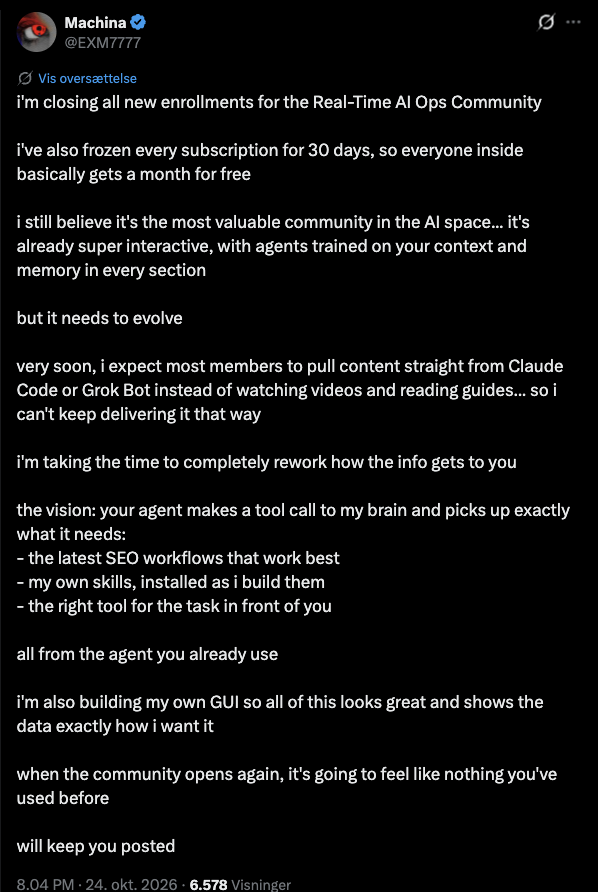
That is a plan, and its commercial result is still open. What stands out is his willingness to interrupt an existing offer because customers may be changing how they use what they buy.
What changes when an agent can use the method?
An agent that can use the method during the task removes some of the customer's effort. A video course asks the customer to find a lesson, understand it and apply it to the work in front of them. With an agent, the value of the method is easier to separate from the format it came in. Hours of video may have taken a lot of work to produce and still add little to the customer's next decision. A customer who wants to study the subject has a different reason to buy; this is about offers that promise practical help with the work.
Take a hypothetical sales-training business that sells a method for reviewing an enterprise deal. A customer's agent could use the method to prepare a review from information the sales team already has. It might flag an approval nobody has secured, or a claim about value that nobody at the customer has confirmed.
The next sales meeting says more than the generated document. Does the manager recognise an issue worth investigating? Can the salesperson explain what they need to learn from the buyer? The method has helped if it changes how the team understands the deal and what they do next. A completed qualification form shows much less.
Which promise is the product making?
The product also has to decide how much help it promises. Preparing questions for a deal review is a narrower responsibility than recommending whether the company should put more people on the opportunity. That second decision depends on the company's alternatives and the cost of pursuing the deal. Before selling the larger promise, the provider needs to show how the method helps the team make that decision.
What can a subscription still charge for?
A subscription can charge for help customers still need after the method is in their agent. Some customers can reuse the preparation method on their own. Others still want an experienced person to question how they read a difficult case, or need the method revised as their sales process changes. Those are different reasons to pay, and they make different demands on the provider.
A method that stays useful without regular intervention can be a good product sold once. An ongoing fee needs an ongoing contribution the customer wants: maintained material that keeps solving a changing problem, or help applying the method to decisions the customer finds hard. Putting a subscription around agent access does not create either need.
Ask what a customer would lose by cancelling after the first month. If the answer is access to a method they have already learned and can keep using, the recurring offer needs more thought. If the answer is help they rely on for the next difficult decision, find out how often they need it and what it costs the business to provide.

What does ongoing support cost the provider?
Making that help part of every subscription is a risk for the provider. The difficult cases can take the most experienced person's time, and easier delivery of the repeatable material may leave that person with fewer but much harder questions. Before promising unlimited support, look at the work those customers actually bring back.
My own clients can already do more research and analysis with AI. In my work with them, I want the time together to benefit from my experience, the questions I ask and our ability to think through their situation. I am also putting as much of that experience as possible into my AI Wingman, built using Claude Code and ChatGPT Codex. I expect the division of work to keep changing, so I keep asking what my involvement contributes.
How to find out what customers will renew
Test it with one customer who has a real task coming up. Give them an authorised way to use the relevant method with their agent, look at the result together and find out where they still needed help. Then see whether the same need comes back on the next task.
That gives the owner something concrete to price and promise: a method sold once, a continuing service or a combination of the two. Let that choice follow the work customers still need, and what it costs to deliver, before rebuilding the offer around a new way of accessing the content.